 All Case Studies
How to Choose a Mobile App Development Company in India
October 20, 2026 | 7 min read

Rahul Yadav
Founder and CEO at Dcrayon
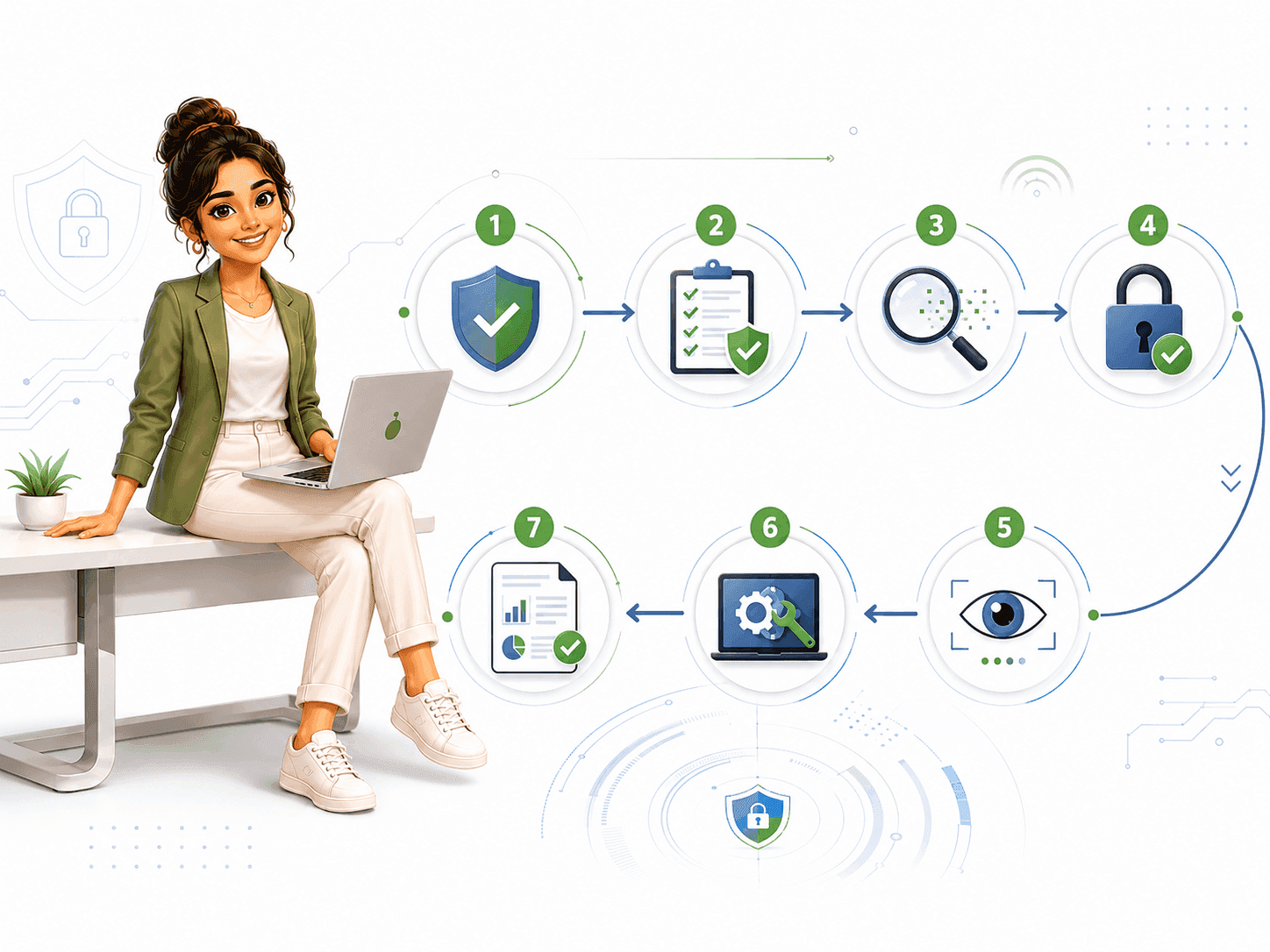
To choose a mobile app development company in India, shortlist three to five firms whose verified reviews describe apps like yours. Check those reviews for count, recency and detail on GoodFirms and Clutch, confirm who will write the code, and make sure your business owns the store accounts and source code from day one.
That is the short answer. The rest of this guide shows how we would run the search if we were the buyer, using the same checks we expect clients to run on our own mobile app development team.
What should I check before I ask app companies for proposals?
Start on two B2B review platforms, then check the work itself. GoodFirms and Clutch are directories built for this job: they list app developers, collect client reviews and publish how they rank firms.
Use each source for a different question:
- GoodFirms and Clutch: what verified clients say, and how much of the firm's work is mobile.
- The App Store and Google Play: install the apps a firm says it built and check the developer name on each listing.
- The firm's own website: case studies that name the client, the problem and the stack.
- LinkedIn: whether the people named in the proposal actually work there.
We go deeper on this in our guide on where to check reviews of app and software companies.
How do I read a GoodFirms profile?
Look past the star rating to the number of reviews, their dates and the services they mention. GoodFirms places each firm on a Leaders Matrix with two axes, and its research methodology says client reviews make up half of the 360-Performance axis, which measures how well firms execute. Within that half, the rating, the review count and the share of reviews from the last 18 months are scored separately.
The other axis, Core Competencies, measures how much of a firm's portfolio sits in the service you are browsing. A firm can rank well overall and still do little app work. On any profile, check:
- Review count: two reviews tell you less than ten.
- Recency: reviews from this year and last year describe the team you would actually get.
- Service match: whether each review is about an app, a website or marketing.
- Vetting: GoodFirms describes a four-step check that includes background checks and client interviews.
How do I read a Clutch profile?
On Clutch, give the most weight to reviews with the Verified badge, and read the project summary under each one. Clutch's methodology page says only verified reviews count toward a firm's Ability to Deliver score, and reviews from the last two years weigh the most. It also says sponsorship changes where a firm appears in a default list, not its underlying rank.
Each profile also shows a Focus chart, built from the share of the firm's stated work in each service line. If most of a firm's focus is advertising or SEO, it may still build good apps, but you should ask for app proof before you go further.
Clutch checks reviewers through a LinkedIn, Google or company email sign-in, then software and editorial checks. A review without the badge is not fake, but it does not count toward the Ability to Deliver score.
What makes an app review worth trusting?
A useful review names the scope, the people and what happened after launch. Praise like "great team, fast delivery" could describe any vendor, while specific detail is much harder to invent.
Our own GoodFirms profile has two reviews that cover apps. The Sygnioin review names the team lead, lists the roles on the project and says how the client and team talked each day. The Jikra review lists what was built first and what the client handed over next, and gives the length of the work. A buyer learns how each project ran, not just that the client was pleased. You can read both on our GoodFirms profile.
It is fair to state the limit too: those are our only two app reviews today. Hold every firm, including us, to the same test of what its reviews actually cover. For more on why reviews shape buying decisions, see The Power of Reviews.
How do I compare and shortlist app development companies?
Score every firm on the same six points, then cut the list to three before asking for proposals. A shared scorecard stops the smoothest sales pitch from winning by default.
- Stack fit: does the firm build the way your app needs, in Flutter, React Native, or native Swift and Kotlin? Our Flutter vs React Native comparison explains the trade-offs.
- Relevant proof: reviews or case studies for apps with features like yours, such as payments, bookings or a store.
- People: the names and roles of whoever will design, code and test.
- Ownership: your company holds the Apple and Google developer accounts, the code repository and the signing keys.
- Testing: a clear plan for real-device testing and store review, ideally with a separate app testing and QA step.
- After launch: who fixes bugs, updates the app for new OS versions and adds features.
On ownership, Apple's enrolment rules say an organisation's name is shown as the seller of its apps on the App Store. That is a good reason to enrol your own company and add the agency as users, rather than letting a vendor publish the app under its own name.
Is an Indian app company a good fit for a UK small business?
It can be a strong fit when you plan around the time gap and agree how you will talk. India Standard Time runs 4 hours 30 minutes ahead of the UK in summer and 5 hours 30 minutes ahead in winter, so a UK morning lines up with an Indian afternoon.
For a small business, these points matter more than the map:
- A fixed weekly call inside the shared working hours.
- One named contact who replies in writing the same working day.
- A written scope, so changes are agreed before they are built.
- Payment terms and invoice currency you are clear on before work starts.
Our head office is in Delhi and we also have a team in London, which helps with UK hours. If you are comparing India with Eastern Europe or anywhere else, run the same scorecard on every firm; the evidence matters more than the country.
What should I ask an app development company on the first call?
Ask questions that make the firm show its process, not just its portfolio. Strong teams answer these quickly and in plain words.
- Which apps in your reviews are closest to mine, and can I install them?
- Who will write the code, and will that person join our calls?
- Would you build this in Flutter, React Native or native code, and why?
- What would you leave out of the first release?
- Who will own the developer accounts, repository and signing keys?
- How do you test on real phones before store submission?
- What happens if Apple or Google rejects a build?
- What does support look like once the app is live?
If budget is your main worry, ask each firm how it would trim scope for a first release. Our guide on how to plan a Flutter MVP lists the things that move an app's cost the most.
Check our reviews
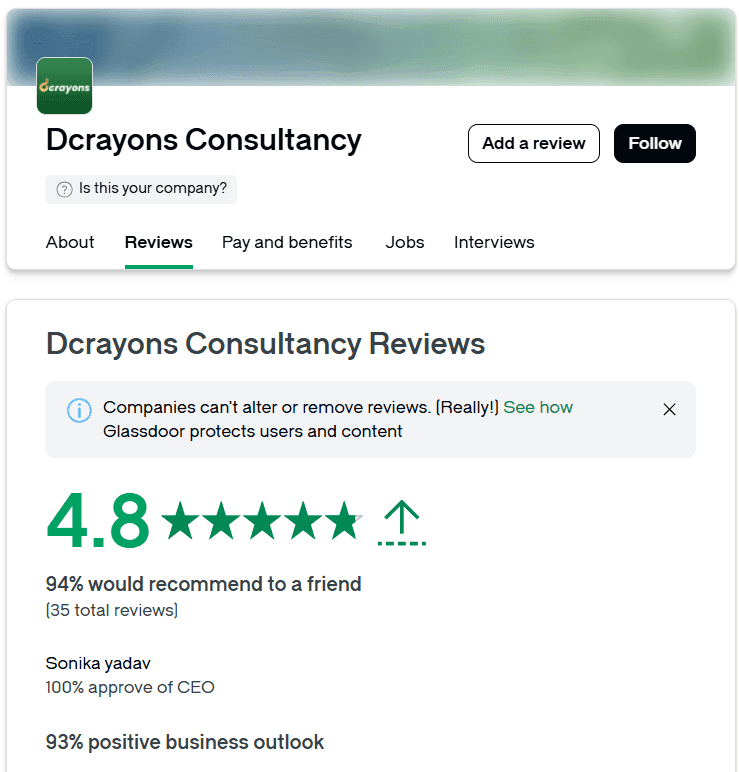
As of October 2026, Dcrayon holds a 4.9 rating from 8 verified reviews on GoodFirms and 4.9 from 7 reviews on Clutch. Read them with the checklist above: what was built, by whom, and what each client asked for next. Both app reviews are for Flutter builds, which our Flutter development page explains.
Questions buyers ask
Which review websites help startups choose an app developer?
GoodFirms and Clutch are the two main B2B review platforms for app and software firms. Use both, and compare what each one's reviews say about mobile work in particular.
Are the top-ranked firms on GoodFirms always the best choice?
Not for every project. Rankings combine reviews, market presence and focus, so a large firm can rank high on general strength. A smaller firm with recent, detailed app reviews may suit a startup better.
How many companies should I ask for proposals?
Three is usually enough to compare well. Send each one the same written brief and the same questions, so the answers line up side by side.
Should a small business pick the cheapest quote?
Pick the quote with the clearest scope. A low price on a vague scope tends to grow later, while a fixed list of first-release features keeps the budget predictable.
Related Articles
More insights from the Dcrayon desk.

Tesla’s Flying Roadster Stunt How Bold Brand Stunts and Marketing Capture Attention in the Age of Social Media
Meta description: Explore how Tesla’s Flying Roadster stunt highlights viral marketing, bold brand positioning, creative campaigns, and social media engagement.

High-Converting Business Websites: What Service Firms Need
What makes a service or B2B website produce enquiries: one page per service, proof beside the form, short forms that ask the right question, and fast pages.

Luxury Brand Website Redesign Without Losing Traffic
How to redesign a premium or luxury brand website and keep search traffic and sales: URL inventory, redirects, photography, type, speed and checkout trust.
Want to grow your digital presence?
Let's discuss how we can help your business.