 All Case Studies









Outsourcing App Development: India vs Eastern Europe
October 26, 2026 | 8 min read

Founder and CEO at Dcrayon
India and Eastern Europe both have strong app teams, so the region rarely decides how a project turns out. The real differences are working-hour overlap with your staff, the paperwork data protection law needs for the transfer, and how firmly the contract hands you the code. Judge each vendor on proof first, then pick the terms that suit you.
Read this knowing who wrote it. Dcrayon's head office is at Netaji Subhash Place in Delhi, India, with a US company in Sheridan, Wyoming and a team in London. Our mobile and software services cover the app, backend and cloud work this comparison touches.
How do India and Eastern Europe compare for app outsourcing?
On skills the two regions are close. On clocks, data law and contract habits they differ in ways you can plan around.
- Time zones: Eastern Europe runs one to two hours ahead of London, while India runs four and a half to five and a half hours ahead.
- Data law: EU members such as Poland, Romania, Czechia and Bulgaria apply the GDPR directly. India, and non-EU states such as Ukraine, Serbia and Moldova, sit outside it.
- Contracts: in every one of these countries, ownership of code written by an outside firm should move to you in a signed document.
- Price: directory profiles show each firm's hourly band, so compare real quotes on one brief rather than regional averages.
- Proof: apps you can install and reviews you can read matter more than the country on the invoice.
Which time zone works better for a UK, EU or US team?
Eastern Europe overlaps nearly all of a UK or EU working day. India overlaps the UK morning up to about lunchtime, and works while US teams sleep.
India Standard Time is UTC+5:30 all year, with no daylight saving. Poland and Czechia use Central European Time, which is UTC+1 in winter and UTC+2 in summer. Romania, Bulgaria and Ukraine use Eastern European Time, one hour further ahead. The UK and the EU change their clocks on the same Sundays in March and October, but India never does, so the UK to India gap grows by an hour every winter.
US clocks change on different dates from Europe's, so for a few weeks each spring and autumn every gap moves by an hour. For a New York team, an Indian working day mostly ends before the American one begins. That suits a handover rhythm: post questions at the end of your day and find answers waiting the next morning. An Eastern European team shares a slice of the New York morning instead.
How does communication differ between the regions?
Less than most buyers expect. English is the usual working language for firms in either region that sell abroad, so the habits of the specific team count for more than geography.
Ask any vendor, in either region, for these:
- A named lead who stays on your project from start to finish.
- A written weekly update, plus a live demo of a build you can install.
- One shared channel, with an agreed reply time on working days.
- A fixed hour each week for calls inside the shared working window.
- A senior contact above the lead for anything that stalls.
Sygnioin's review on our GoodFirms profile shows one working setup: a team led by Anhad, with a developer, an SEO specialist and a video editor, who talked with the client through a WhatsApp group. In the client's words: "Their friendly and collaborative approach made the entire process smooth, and I'd recommend asking for the Anhad team if you decide to work with Dcrayon."
What should the contract say about IP and code ownership?
It should pass all code, designs and content to you in writing once you pay, and it should keep your accounts in your name from the first day.
In India, the UK and most of Europe, the firm that writes code under a services contract usually holds the rights until a signed document passes them to you, and the form that document must take varies by country. Clauses worth having in either region:
- A transfer of all IP rights on payment, worldwide and with no time limit, in the form local law requires.
- A list of open-source and third-party parts, with the licence of each.
- The code repository in your organisation, and the app store accounts and signing keys in your company name.
- The governing law, and the court or arbitration seat that will hear disputes.
- An exit clause covering handover of code, credentials and documents.
Account ownership is a choice to make early. The Flutter app we made for Natually is published from our own Google Play developer account on the client's behalf, as its listing shows. If you want the account in your name, settle it before launch. A lawyer in your own country should still read the final draft.
How do GDPR, UK GDPR and India's DPDP Act apply?
Your duties follow your users. A UK or EU business stays bound by the UK GDPR or the GDPR wherever its vendor sits, and the vendor's location mainly decides how much transfer paperwork you need.
- EU vendors. A firm in Poland or Romania works under the GDPR itself, so an EU client sending it data makes no international transfer. The UK also treats EEA countries as adequate.
- Vendors in India or outside the EU. As of October 2026, the European Commission's list of adequacy decisions includes neither India nor Ukraine nor Serbia. An EU client therefore needs a safeguard such as standard contractual clauses.
- UK clients. The ICO's guidance on international transfers covers the UK IDTA, the UK Addendum to the EU clauses and the transfer risk assessment, which UK law now calls a data protection test.
- Every vendor. Sign a processor contract under GDPR Article 28 that limits what the vendor may do with personal data.
India's Digital Personal Data Protection Act, 2023 adds its own layer. Under section 17(1)(d), much of the Act does not apply when a firm based in India processes data of people outside India under a contract with a person outside India. The duty in section 8(5) to keep reasonable security safeguards still applies. If your app serves users in India, the Act covers your own processing too.
Good practice cuts the risk in both regions. Give the vendor masked test data instead of live customer records, which our database design team can set up, and keep production hosting in a region you choose through cloud solutions. Health data brings extra rules, covered in our healthcare app checklist. None of this is legal advice.
How do I find and vet top app outsourcing firms in either region?
Top-performing means recent, verified reviews for apps like yours, so build the list from evidence and run the same checks in both regions.
- On GoodFirms and Clutch, open the mobile, Flutter or React Native category and filter by country. Our guide on reading app company reviews explains how each site verifies them.
- Install two apps from each portfolio and check the developer name on the store listing.
- Look the firm up in its company register: the Ministry of Corporate Affairs in India, Companies House in the UK, or the national register in the vendor's country.
- Meet the people who would build your app, not only the sales lead.
- Ask for the draft contract and data processing terms before talking price.
- Ask how staff access production systems and where credentials are stored. Firms that run automated release pipelines, the kind our DevOps services set up, usually have short answers here.
The questions for a first call are in how to choose an app development company in India. Then send your shortlist a brief every firm can price.
Which region is more affordable for a UK small business?
The one whose total cost is lower on your brief, which a rate card alone cannot show. Overlap hours, your own management time and rework all land on the bill.
Most firms show an hourly band on their GoodFirms and Clutch profiles, so you can compare them without guesswork. Ours, from our GoodFirms profile in October 2026, is $25 to $49 an hour. Ask three firms to price the same scope, and compare what each total includes. The factors that move an app quote are covered in what sets mobile app cost in India.
Check our reviews
Look us up before you take our word on anything here. Our GoodFirms page carried a 4.9 rating over 12 reviews when we checked in October 2026, and we pay GoodFirms for a PRO plan there. Our Clutch page carried 4.9 over 7 reviews at the same check.
Questions buyers ask
Is my data safer with a vendor inside the EU?
For a UK or EU business, the legal route is simpler, since no transfer safeguard is needed. Actual safety depends on the vendor's access controls and habits, so ask the same security questions wherever the team sits.
Can I split the work between India and Eastern Europe?
Yes, though every extra team adds handovers. If you split, keep one owner for the backend and the API contract, and give each team its own clearly bounded part.
Do I need a lawyer in the vendor's country?
For a large contract, it helps. For a smaller project, a lawyer in your own country can review the assignment, data processing and dispute terms, and flag anything that needs local advice.
Related Articles
More insights from the Dcrayon desk.

From Scrolling to Shopping How Meta Muse Is Changing E-Commerce
What if your next shopping assistant wasn’t a person, but an AI agent? Meta is exploring exactly that possibility with Muse, its AI-powered assistant designed to help users discover products, compare deals, and make purchasing decisions.
Read More about From Scrolling to Shopping How Meta Muse Is Changing E-Commerce

Tesla’s Flying Roadster Stunt How Bold Brand Stunts and Marketing Capture Attention in the Age of Social Media
Explore how Tesla’s Flying Roadster stunt highlights viral marketing, bold brand positioning, creative campaigns, and social media engagement.
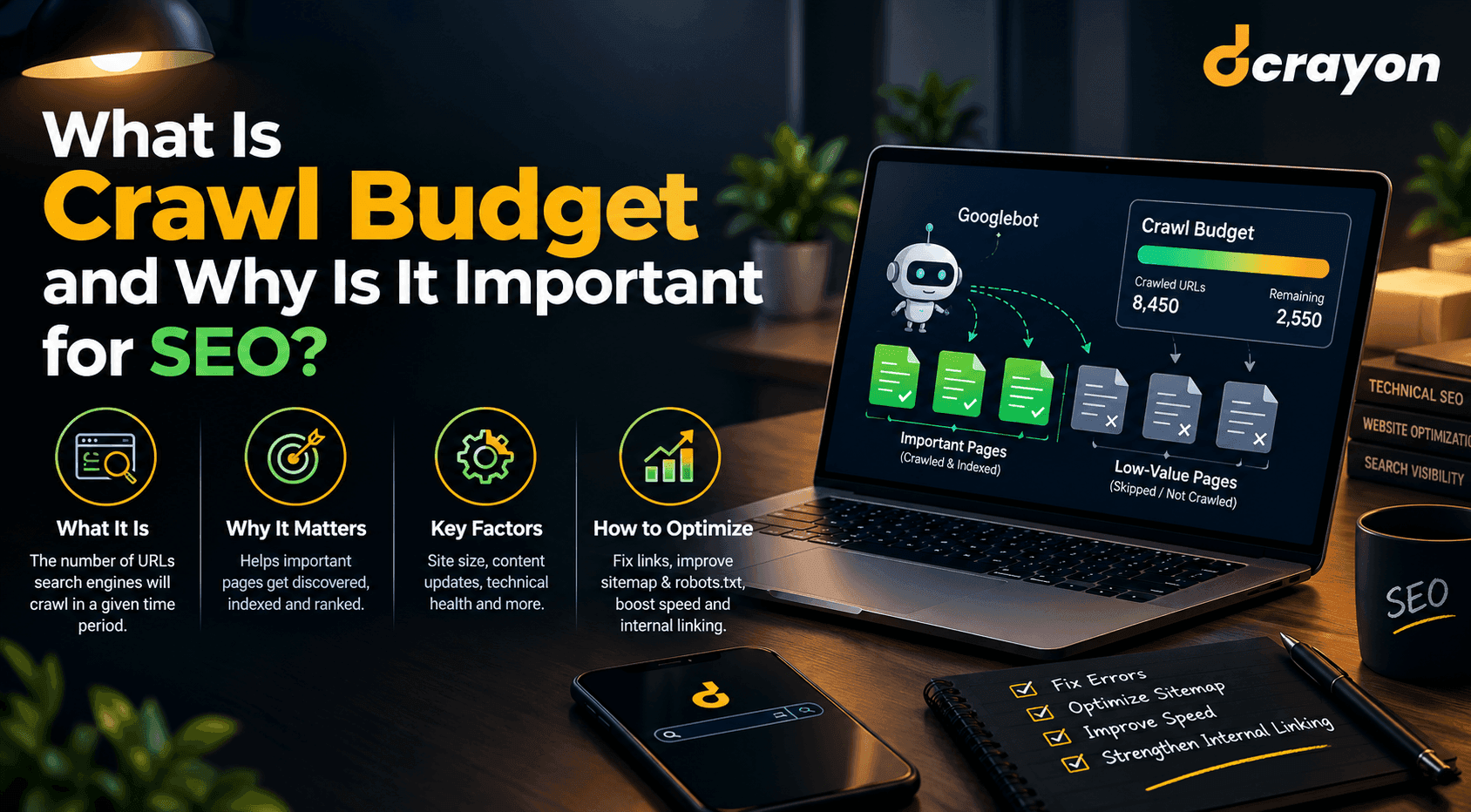
What Is Crawl Budget and Why Is It Important for SEO?
When reviewing your website for technical SEO in tandem with professional web development, you can detect unnecessary redirects, broken links, duplicate URL patterns, and other problems that hinder website crawling.
Read More about What Is Crawl Budget and Why Is It Important for SEO?
Want to grow your digital presence?
Let's discuss how we can help your business.