 All Case Studies



Healthcare App Development for Startups: A Buyer's Checklist
October 26, 2026 | 7 min read

Founder and CEO at Dcrayon
To choose a developer for a healthcare app, first list the privacy laws that cover your users: HIPAA in the US, the DPDP Act in India and GDPR in the UK and EU. Then ask each shortlisted firm how it will meet Apple and Google health rules, record consent, store data and pass an OWASP MASVS security test.
This checklist is buyer guidance. Dcrayon has not published a healthcare app case study, so use these questions on every vendor, us included. Our mobile app development page sets out who works on a build and in what order. Nothing here is legal advice, so confirm each point with a lawyer in your market.
Which privacy laws apply to a healthcare app?
The laws follow your users and clients, not your developer's location, and a cross-border startup often meets several.
HIPAA (United States). HIPAA binds covered entities: health plans, clearinghouses and health care providers that submit transactions such as claims electronically. CMS guidance on covered entities says a covered entity that engages a business associate needs a written business associate contract requiring HIPAA compliance. If your app handles patient data for a clinic or insurer, expect to sign one, and ask whether your developer and hosting provider will sign one too. An app sold straight to consumers may sit outside HIPAA, but other US rules can still apply.
DPDP Act (India). Under the Digital Personal Data Protection Act, 2023, consent must be free, specific, informed, unconditional and unambiguous, given by a clear affirmative action. The Act's own example is a telemedicine app that also asks for the phone's contact list: consent counts only for the telemedicine service, because the service does not need the contacts. The DPDP Rules, notified on 14 November 2025, allow 18 months for phased compliance and require a separate consent notice in plain language. The Act itself sets the largest penalty, up to Rs 250 crore, for failing to keep reasonable security safeguards.
GDPR and UK GDPR (UK and EU). Health data is special category data under Article 9, so you need a lawful basis plus an Article 9 condition, such as explicit consent. Large-scale processing of health data requires a data protection impact assessment under Article 35 before it starts. In the UK, the ICO publishes guidance on both.
What do Apple and Google require from health apps?
Both stores review health apps closely and want the purpose and data use stated plainly.
On the App Store, guideline 5.1.1(ix) says apps in highly regulated fields, healthcare among them, should be submitted by the legal entity that provides the service, not by an individual developer. Guideline 5.1.3 bars using health, fitness and medical data for advertising, marketing or data mining, except to improve health management or for health research, and then only with permission. It also rules out storing personal health information in iCloud. Guideline 1.4.1 asks medical apps to show the data and method behind any accuracy claim and to remind users to check with a doctor.
On Google Play, the Health Content and Services policy asks every developer to complete the Health apps declaration in Play Console and to link a privacy policy both in the Console and inside the app. Apps regulated as medical devices are labelled as such and must show proof of approval on request. Other health apps must state in their description that the app is "not a medical device and does not diagnose, treat, cure, or prevent any medical condition."
How should a health app ask for consent?
Ask for each purpose separately, at the moment it matters, and make withdrawing as easy as agreeing. A single tick box at sign-up is hard to square with the consent standards above.
- Give care, product improvement, research and marketing their own separate choices.
- Ask for camera, location or sensor access only when a feature needs it. Google's policy says a health app should not request permissions its core function does not need.
- Log every consent with a timestamp, the notice version and the choice made.
- Put a withdraw option in settings, and stop that processing when someone uses it.
- For users under 18 in India, plan for verifiable parental consent. The Rules list exceptions for some essential services, healthcare among them, so check whether yours qualifies.
Where should a health app store data?
Keep as little as possible on the phone, store the rest in a cloud region you can name, and encrypt it everywhere. Your privacy policy should be able to say where each record lives.
- On the device: keep sign-in tokens in the iOS Keychain, or encrypted with a key held in the Android Keystore, avoid writing records to plain files, and clear cached data at sign-out.
- On the server: encryption in transit and at rest, role-based access, and an audit log of who opened which record.
- Region: pick the hosting region per market, and check whether contracts with clinics or insurers expect data to stay in-country.
- Retention: set how long each record type is kept and how it is deleted, then build the deletion job as well as the policy.
- Backups: encrypted, access-controlled, and restored in a real test before launch.
Our database design and cloud solutions pages cover choices like these.
How do you security-test a health app with OWASP MASVS?
Ask for a test report mapped to the OWASP MASVS, run by people who did not write the code. OWASP describes MASVS as the industry standard for mobile app security.
MASVS sorts its controls into eight groups, and a health app report should cover each one:
- MASVS-STORAGE: sensitive data kept on the device.
- MASVS-CRYPTO: the cryptography that protects that data.
- MASVS-AUTH: sign-in, and what each user is allowed to see.
- MASVS-NETWORK: data moving between the app and the server.
- MASVS-PLATFORM: how the app deals with the phone and other apps.
- MASVS-CODE: safe data handling and keeping the app up to date.
- MASVS-RESILIENCE: resistance to reverse engineering and tampering.
- MASVS-PRIVACY: controls that protect the user's privacy.
OWASP also publishes testing profiles: MAS-L1 for essential security, MAS-L2 for advanced security, MAS-R for resilience and MAS-P for baseline privacy. Ask which profile the vendor tests against and why, and test the server API as well. Our app testing and QA page describes how we test on real devices, and API development covers the server side.
How do you vet a vendor's healthcare experience?
Ask for proof you can check. A firm with real health work answers with documents, not adjectives.
- An app you can install. Ask for a live health app and check the developer name on its store listing.
- A data map. Ask for a redacted example showing what an app collected, where it was stored and who could see it.
- A security report. Ask for a redacted MASVS test report and the date of the last retest.
- Contracts. Ask whether they have signed a business associate contract or a data processing agreement before.
- Account ownership. Your company should hold the Apple and Google developer accounts, which suits Apple's guideline 5.1.1(ix).
- Clinical wording. Ask who checks medical claims in the app and the store listing before submission.
- Compliance scope. Agree up front which privacy and security tasks are in the price.
That last point shows up in client reviews. On Clutch, Instacertify's co-founder wrote about our website build: "Unlike our past vendor, who would say that certain development tasks were extra and delay the fixes, [Dcrayon] made everything right." That was a website, not a health app, but written scope helps any project. Put these requirements in writing with our app brief guide, then build a shortlist with how to choose a mobile app development company in India.
Our own app proof today is the Natually shopping app, built in Flutter, plus two Flutter app reviews on GoodFirms. None of them is a health app, so ask us to walk through this checklist like anyone else.
Check our reviews
Our review profiles carry no health app work yet. In October 2026 we had 12 reviews averaging 4.9 on GoodFirms, a site where we pay for PRO placement, and 7 reviews averaging 4.9 on Clutch. How each platform checks that a reviewer is real is covered in where to check reviews of app and software companies.
Questions buyers ask
Is there a HIPAA certification for app developers?
There is no official HIPAA certificate issued by the US government. Ask instead for the vendor's security controls, its business associate contract terms and recent security test results.
Should a health app be built in Flutter or native code?
Decide by the device data you need. If the app reads Apple HealthKit or Android Health Connect, check that the framework's plugins cover those readings before you commit. Our Flutter vs React Native comparison covers the wider trade-offs.
What does a healthcare app cost?
Health data adds consent flows, audit logs, security testing and legal review on top of the core features. Budget for those extras when you read what sets app development cost in India.
Related Articles
More insights from the Dcrayon desk.
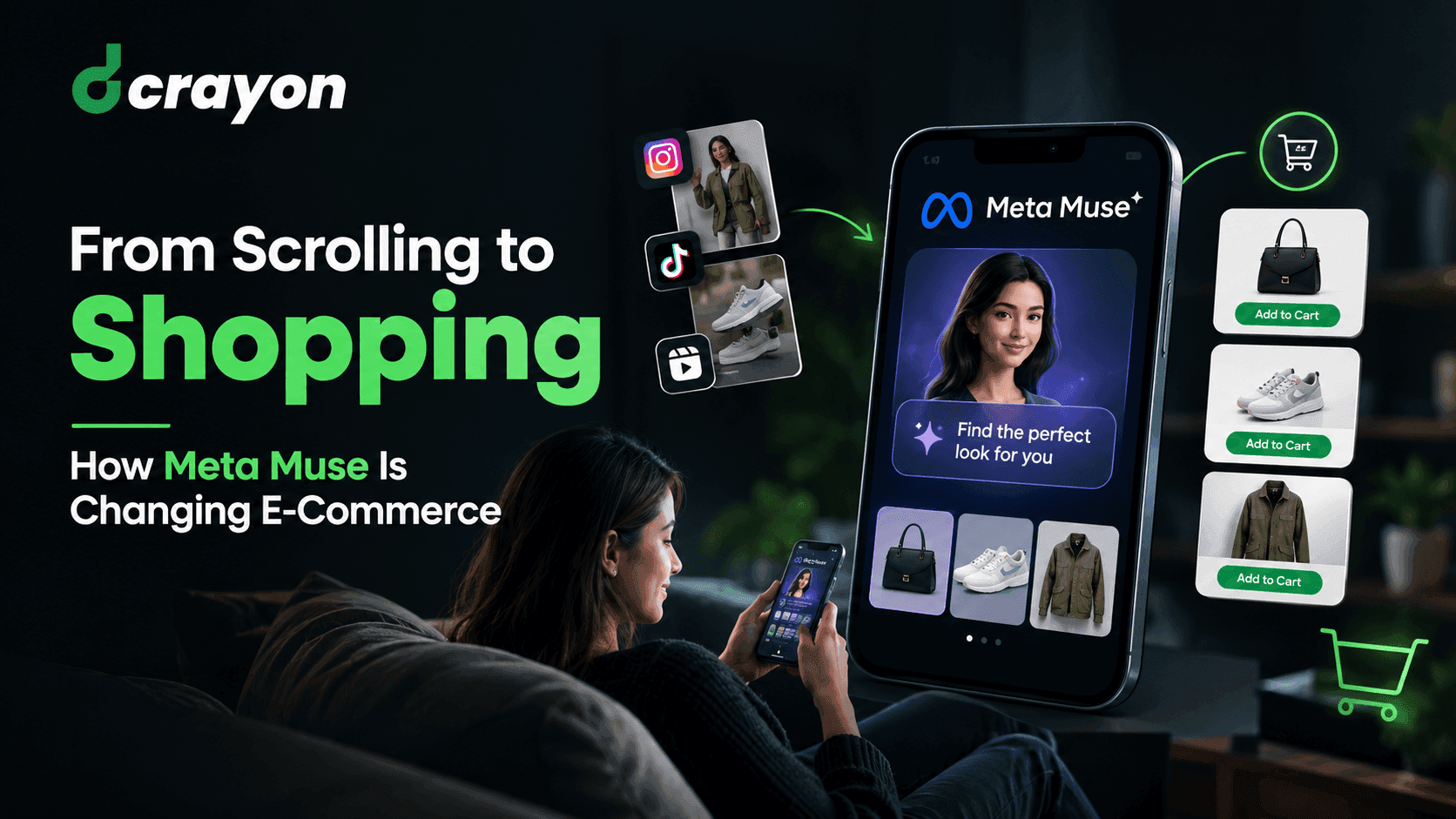
From Scrolling to Shopping How Meta Muse Is Changing E-Commerce
What if your next shopping assistant wasn’t a person, but an AI agent? Meta is exploring exactly that possibility with Muse, its AI-powered assistant designed to help users discover products, compare deals, and make purchasing decisions.
Read More about From Scrolling to Shopping How Meta Muse Is Changing E-Commerce

Tesla’s Flying Roadster Stunt How Bold Brand Stunts and Marketing Capture Attention in the Age of Social Media
Explore how Tesla’s Flying Roadster stunt highlights viral marketing, bold brand positioning, creative campaigns, and social media engagement.
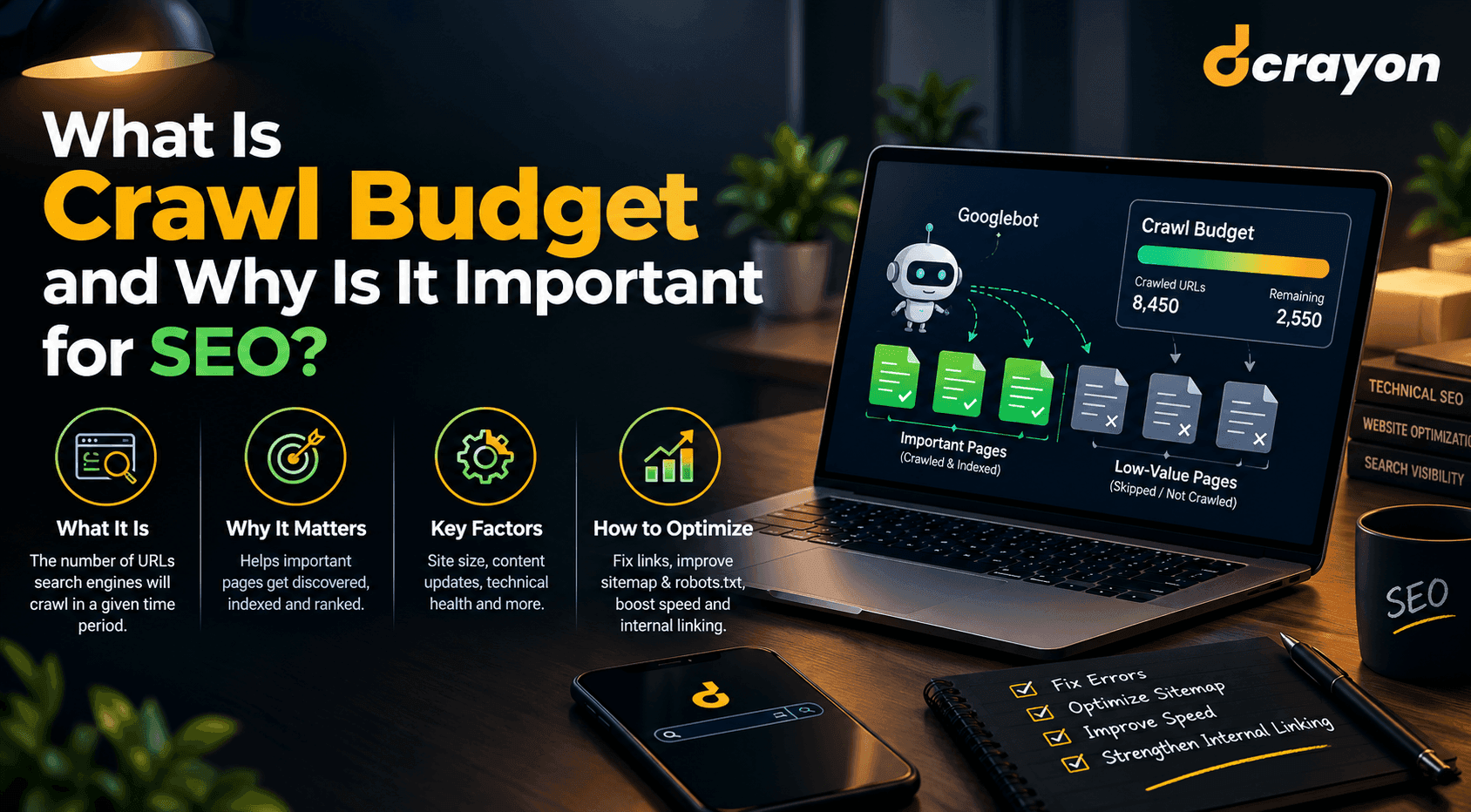
What Is Crawl Budget and Why Is It Important for SEO?
When reviewing your website for technical SEO in tandem with professional web development, you can detect unnecessary redirects, broken links, duplicate URL patterns, and other problems that hinder website crawling.
Read More about What Is Crawl Budget and Why Is It Important for SEO?
Want to grow your digital presence?
Let's discuss how we can help your business.