 All Case Studies






Custom Software vs Off-the-Shelf Tools: How to Choose
October 20, 2026 | 7 min read

Rahul Yadav
Founder and CEO at Dcrayon
Choose off-the-shelf software when your process fits the tool and you only need standard connections. Choose custom software when people move data between systems by hand, when a tool's limits decide how you run the business, or when you need to own the code and data. Most companies end up with both: bought tools joined by custom code.
The useful question is rarely "build or buy" for the whole business. It is "which one process deserves its own code?" Our custom web app team builds that custom layer, and the examples below come from projects published in our case studies and client reviews.
When is off-the-shelf software the right choice?
When the job is common, the tool already fits, and its fee is lower than building and looking after your own version.
- Accounting, payroll, email and calendars are solved problems. Buy them.
- A new online store with a standard catalogue usually belongs on a hosted platform first.
- A small sales team can run on a ready CRM for a long time.
- If your team uses a tool on its default settings and rarely fights it, keep it.
Shopify is a good example. Dcrayon became a Shopify Partner in December 2020, and our Shopify development page covers work for stores that stay on the platform. Shopify's own documentation says its Admin API lets you build apps and integrations that extend and enhance the Shopify admin, so a missing feature does not always mean leaving the platform.
When does custom software make more sense?
When the same record is typed into two places, when add-ons pile up around one process, or when that process is how you win customers.
- Someone copies data from one system to another every week.
- A rule matters to you that no tool supports, such as sending each lead to the right installer by area.
- Separate add-on apps each own a piece of your checkout or customer data.
- You need an audit trail that shows who changed what, and the tool cannot give one.
- You want the platform, the data and the code to belong to your company.
If two or more of these sound familiar, a custom build or a custom integration is worth scoping. Our older overview of custom web development services lists the kinds of features teams usually commission.
Can custom software integrate with the systems we already use?
Yes. Often the best custom project is a small service that joins two tools you keep, rather than a replacement for either.
The Roundglass project shows the pattern. Roundglass, a wellbeing company in India, kept employee records in Zoho HR and staff identities in Microsoft Azure AD. IT administrators copied every joiner and leaver between the two by hand. New starters could arrive without email or tools, leavers kept access and paid licences, and nobody had an audit trail. Dcrayon built a Node.js and PostgreSQL service that treats Zoho HR as the source of truth for onboarding and offboarding, so both tools stayed in place.
Check for a ready connector before you pay for code. Microsoft's guide to automated app provisioning explains that Entra ID provisioning covers creating, maintaining and removing user identities as status or roles change, through connectors such as SCIM, REST and SQL. Build custom when the systems you own do not meet in a supported connector, or when your rules do not fit one. Our API development page covers that kind of work.
What does a custom customer-facing feature look like?
Usually one focused tool on your website that answers a question customers would otherwise phone in.
RAA Logistics is a freight forwarder in Jebel Ali Free Zone, Dubai, covering sea, air and road freight, customs clearance, warehousing and cargo insurance. Its earlier web presence did not separate those services or work well on a phone. Customers needed shipment status without calling the office, and quotes depend on knowing the service first. Dcrayon built a freight forwarding website with shipment tracking, and the case study walks through that build.
When should an online store move off Shopify to its own platform?
When the apps holding the store together cost more effort than owning the code, and you have a plan to keep every old link working.
Natually, an Indian natural skincare and haircare brand, had a Shopify store that relied on separate apps for checkout, gifts, discounts and video. About 170 products and their old links had to survive the move. Dcrayon imported the catalogue into its Laravel 12 platform in March 2026, moved the store onto its own AWS server in May 2026, and built a checkout with stock holds and Razorpay payments. For the hosting side of a move like this, see our cloud solutions page.
Old links are where migrations go wrong. Google's guidance on site moves with URL changes says to map each old URL to its new one and recommends server-side permanent redirects. Our post on building an e-commerce website with Laravel covers the store features that framework supports.
Ownership is often the real reason. The founder of Proven wrote on GoodFirms: "I went to Dcrayon because I wanted Proven on a platform we own rather than a rented one, and that's exactly what they delivered." He added: "They connected it to our shipping and payment partners, set up our ad tracking properly, and made installation leads route straight to our installer network automatically instead of being passed around on calls."
UK brands weighing this step can talk to our London team. Dcrayon's head office is in Delhi, and Dcrayon Inc. operates from Sheridan, Wyoming.
How do I shortlist an agency that works across many technologies and business domains?
Ask for proof shaped like your problem, not the longest list of logos or languages.
- Match the problem type. An HR-to-identity sync, a tracking page and a store migration need different skills. Ask for the one closest to yours.
- Ask why each stack was chosen. Roundglass ran on Node.js and PostgreSQL; Natually moved to Laravel 12. A good team explains the choice in plain words.
- Ask how old data and links stay safe. Migration planning shows maturity faster than any portfolio.
- Ask who owns the code, servers and accounts. The answer should be your company.
- Read independent reviews for the same kind of work. Our guide on where to check reviews of app and software companies shows what verified reviews look like.
- Ask for one reference call. Ten minutes with a past client is worth an hour of sales slides.
Our own spread covers a wellbeing company's HR and identity systems, a Dubai freight forwarder, an Indian skincare store and a water purifier brand's commerce platform. If your custom work is the first version of a new product, start with our SaaS MVP guide for non-technical founders.
Check our reviews
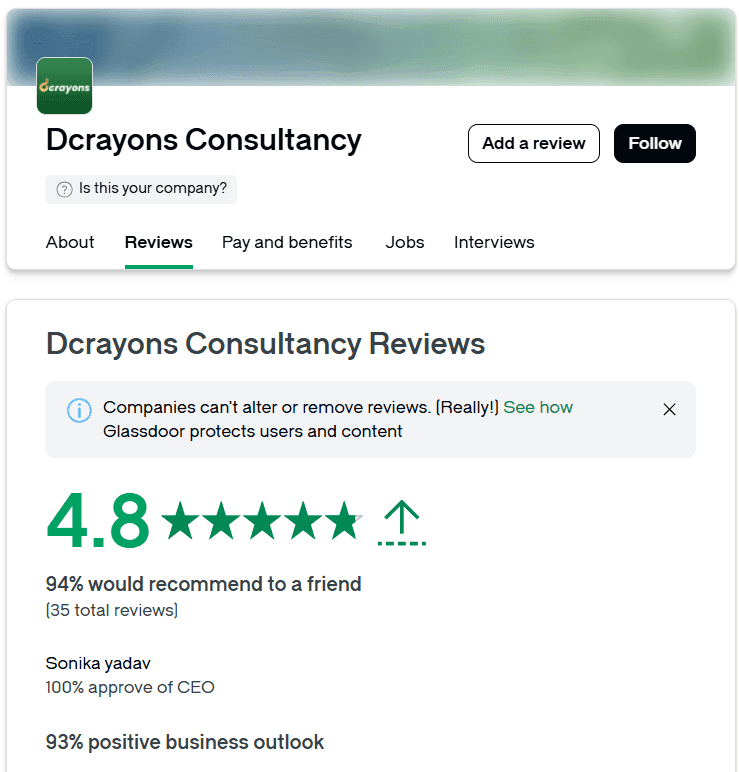
The Proven review quoted above is one of eight verified reviews behind our 4.9 score on GoodFirms. Clutch holds seven more client reviews, which also average 4.9. Both figures date from October 2026.
Questions buyers ask
Is custom software always more expensive than a subscription?
Not over every period. Compare the yearly cost of the tool, its add-ons and the staff time spent working around it with the cost of building and maintaining your own. Integrations, user roles, data migration and upkeep change the build side most.
Can we start with a tool and build later?
Yes. Pick tools with full data export and API access, so a later move is a project and not a rescue.
Who looks after custom software after launch?
Either your own developer or the team that built it, provided the code, documentation and access sit with you. On Proven, the founder wrote: "After go-live they kept building with us rather than closing the file."
Do we have to replace everything at once?
No. Replace or connect one process at a time. Roundglass kept both Zoho HR and Azure AD and added a service between them.
Related Articles
More insights from the Dcrayon desk.

Tesla’s Flying Roadster Stunt How Bold Brand Stunts and Marketing Capture Attention in the Age of Social Media
Meta description: Explore how Tesla’s Flying Roadster stunt highlights viral marketing, bold brand positioning, creative campaigns, and social media engagement.

High-Converting Business Websites: What Service Firms Need
What makes a service or B2B website produce enquiries: one page per service, proof beside the form, short forms that ask the right question, and fast pages.

Luxury Brand Website Redesign Without Losing Traffic
How to redesign a premium or luxury brand website and keep search traffic and sales: URL inventory, redirects, photography, type, speed and checkout trust.
Want to grow your digital presence?
Let's discuss how we can help your business.