 All Case Studies









SaaS MVP for Non-Technical Founders: Idea to Paying Users
October 20, 2026 | 7 min read

Rahul Yadav
Founder and CEO at Dcrayon
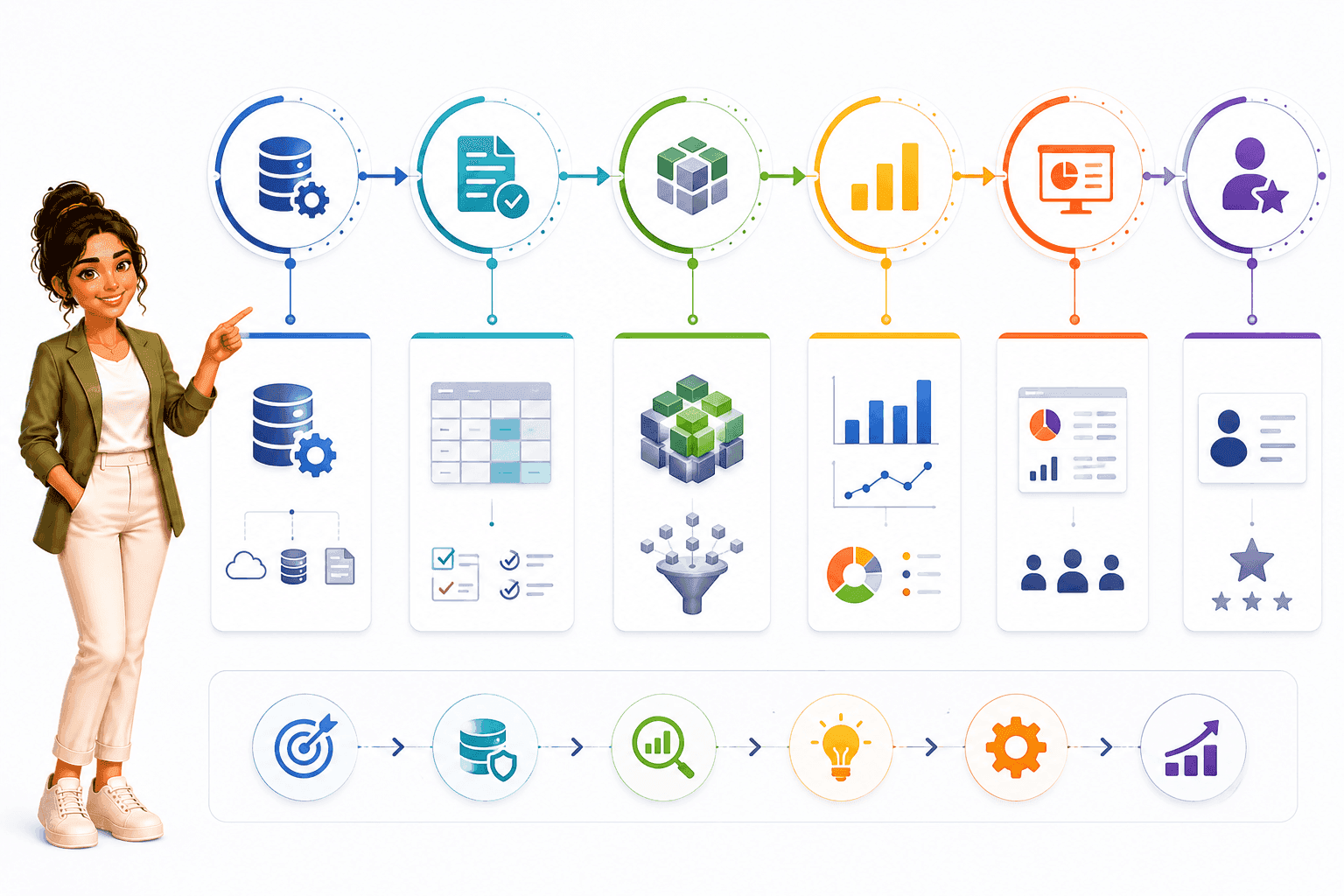
A SaaS MVP is the smallest paid product that proves one type of customer will pay you to solve one problem. For a non-technical founder, that means sign-up, one core workflow, billing, a basic admin panel and hosting in your own name. Everything else waits for version two. Hire a team that writes the scope before it writes code.
This guide follows the order in which founders meet each decision, from the first scope note to the first invoice. If you want a team to build it with you, our SaaS development page explains how Dcrayon approaches subscription products.
What does a SaaS MVP need before the first paying user?
Five parts, and only five: a way in, the job itself, a way to pay, a view for you, and a place to run it.
- Sign-up and login. Email and password or Google sign-in, plus password reset and email confirmation.
- The core workflow. The single task a customer pays for, built so it works from start to finish.
- Billing. Plans, an optional trial, invoices and a rule for what happens when a card fails.
- Admin panel. A private screen where you see accounts, change plans and help customers.
- Hosting and monitoring. A cloud account, daily backups and alerts when something breaks.
Test every other idea with one question: will a customer pay sooner because of it? If not, park it.
How do I scope a SaaS MVP without a technical co-founder?
Write the scope in business language. A good vendor turns it into a technical plan and shows you where it is unclear.
- Describe your customer in one sentence: who they are and what annoys them today.
- Write the paid job as a short story, for example "An office manager adds a supplier, sets a payment date and gets a reminder two days before."
- Sketch each screen that story needs on paper. Boxes and arrows are enough.
- Mark every feature "must have" or "later", and be strict with yourself.
- Pick one number that says the MVP worked, such as the first ten accounts that pay after the trial.
- Ask each vendor to return a written scope with screens, data and a clear "out of scope" list.
Demand comes before code. Our note on common startup mistakes covers why market research belongs ahead of the build.
Which user roles should the first version have?
Usually three: the account owner, a team member, and you as the platform admin.
The owner pays, invites colleagues and manages settings. A team member does the daily work but cannot see billing. The platform admin is you: you can see every account to help customers, but customers can never see each other. That separation, called multi-tenancy, is far easier to plan on day one than to add later.
Ask your vendor how they will protect logins and data. The OWASP Top 10, which OWASP calls a standard awareness document for developers and web application security, is a fair list to walk through together.
How should a SaaS MVP handle billing?
Use a billing provider instead of custom payment code, and choose it by where your customers pay.
- Card customers worldwide. Stripe Billing automates recurring payments, handles trials and renewals, issues invoices, retries failed payments and offers a self-service customer portal.
- Customers in India. Razorpay Subscriptions charges customers at regular intervals and supports cards, UPI AutoPay and eMandate. Our longer piece on UPI integration explains how AutoPay mandates work.
- Plans. Launch with one or two plans. Decide monthly or annual, flat price or per seat, and whether a trial needs a card.
- Events. The billing provider tells your app when a payment succeeds or fails, and your app must act on it, for example by locking paid features after a failed renewal.
- Invoices. If you sell in India, ask early how invoices will show GST details.
What should the admin panel include?
Enough to run the business without calling a developer.
- A list of accounts with plan, status and sign-up date.
- Tools to extend a trial, change a plan or issue a refund through the billing provider.
- A safe way to view an account for support, with a log of who looked and when.
- Data export for investors or an accountant.
- Feature switches per account, to test new features with a few customers first.
Founders often underrate this screen, yet some products cannot open without it. When Dcrayon rebuilt Mechanic Bazaar, a B2B parts marketplace in New Delhi, on Laravel 12, Inertia and React, wholesaler KYC and approval were part of the build: an admin step that decides who may sell at all.
Where should the product be hosted, and who should own the accounts?
Host on a mainstream cloud such as AWS, Microsoft Azure or Google Cloud, and open every account in your company's name from day one.
- Code. Keep the repository in your own GitHub, GitLab or Bitbucket organisation and add the vendor as members. If code starts elsewhere, GitHub's guide to transferring a repository confirms the new owner can immediately administer its contents, issues, pull requests, releases and settings.
- Cloud and domain. The hosting bill, the domain and the DNS sit in your name.
- Payments. Your Stripe or Razorpay account belongs to your company, so payouts reach your bank.
- Supporting services. Email sending, error tracking and analytics accounts belong to you too.
- App stores. If a phone app follows, register the Apple Developer and Google Play Console accounts to your business. Our guide on planning a Flutter MVP covers that step.
- Contract. A clause that assigns the code to you once paid. Ask a lawyer to read it.
For a larger setup, our cloud solutions team works on AWS, Azure and Google Cloud.
Do I need a CTO or a fractional CTO before I hire a team?
Not always. You need someone on your side who can read the plan and push back.
A fractional CTO is a senior engineer who works part-time for you, reviewing the scope, the architecture and the vendor's work. One is worth hiring when the product handles sensitive data, the budget is large, or you plan an in-house team soon. Without one, ask the vendor to explain each decision in writing and insist on a weekly demo of working software you can click through yourself.
Which software development company should I hire for my startup?
Hire the team that asks the most about your customers before it talks about technology, and that can show reviews from clients like you.
Questions to ask every vendor:
- Who exactly will build my product, and will the same people stay on it?
- Can I log in to a product you built that has user roles and billing?
- How will I see progress each week?
- Which accounts will be in my name from the first day?
- What happens to the code if we stop working together?
- What is out of scope for version one?
- Can I speak to a past client?
Then read what clients wrote, and look for what happened after launch as well as before it. Jikra's GoodFirms review describes a website and Flutter app, after which the same team took on its Amazon store and social media, across eight months. Our guide on where to check reviews of app and software companies explains how review sites verify what you read. Before you build at all, check whether an existing tool already does the job: see custom software vs off-the-shelf tools. If the MVP must talk to other systems, our API development page covers that side.
Check our reviews
Our GoodFirms profile lists eight verified client reviews, our Clutch profile lists seven, and both show a 4.9 rating; those are October 2026 figures. The Jikra review mentioned above is there in full, so you can weigh it against your own project.
Questions buyers ask
How small should a SaaS MVP be?
Small enough that one customer type can finish one paid job from start to finish. If a feature does not help that job, it goes on the later list.
Can I test my idea with no-code tools first?
Yes. No-code tools are a fair way to test demand. Check their export options first, and plan a rebuild when you need custom roles, billing rules or strict separation of customer data.
What changes the cost of a SaaS MVP?
The number of user roles, the integrations with other systems, the billing rules, the design depth, whether a phone app is included, and any compliance needs in your market. Fewer of each means a smaller first build.
Related Articles
More insights from the Dcrayon desk.

Tesla’s Flying Roadster Stunt How Bold Brand Stunts and Marketing Capture Attention in the Age of Social Media
Meta description: Explore how Tesla’s Flying Roadster stunt highlights viral marketing, bold brand positioning, creative campaigns, and social media engagement.

High-Converting Business Websites: What Service Firms Need
What makes a service or B2B website produce enquiries: one page per service, proof beside the form, short forms that ask the right question, and fast pages.

Luxury Brand Website Redesign Without Losing Traffic
How to redesign a premium or luxury brand website and keep search traffic and sales: URL inventory, redirects, photography, type, speed and checkout trust.
Want to grow your digital presence?
Let's discuss how we can help your business.