 All Case Studies







10 PPC tactics that survived Google's 2026 algo update
February 22, 2026 | 4 min read

Yash
Google's 2026 algorithm update reshuffled paid-search winners. Smart Bidding got smarter, broad match got bolder, and the CPC inflation that defined 2025 actually eased on intent-rich queries. The tactics below are the ones that survived in our portfolio of 75 paid retainers because they ground keyword intent in first-party data instead of platform defaults.
Tactic 1: first-party signal feeds
The biggest 2026 find is feeding Smart Bidding your CRM data. Specifically:
- Customer match lists segmented by RFM (recency, frequency, monetary).
- Offline conversion uploads with revenue per lead, not just lead count.
- Enhanced conversions for web (hashed email at form submit).
Accounts feeding all three see 22 to 38 percent lower CPA in the first 60 days vs accounts on conversion-counts only.
Tactic 2: rebuilding account architecture around revenue, not last-click
Most accounts still use Search vs Shopping vs Display as the top-level split. We rebuild around revenue-generation profile:
- Heavy-converter campaigns (brand, direct-intent terms). max conversion value, no caps.
- Acquisition campaigns (top-funnel + generic terms). max conversion value with target ROAS.
- Retention / re-engagement (in-market, similar audiences, RLSA). separate budget, value-based.
The split forces clean attribution and prevents one bucket from eating another's budget.
Tactic 3: broad match with the right guardrails
Broad match was uncomfortable in 2024. In 2026, with first-party signals feeding the model, broad match becomes the highest-use match type. Guardrails that make it work:
- Negative keyword lists curated weekly (not monthly).
- Audience targeting on every broad-match campaign (no audience = junk traffic).
- Bidding strategy locked to target ROAS or target CPA (no manual CPC on broad).
Tactic 4: Performance Max with asset-level reporting
PMax used to be a black box. The 2026 reporting upgrades let you see per-asset performance + per-channel split. Use it.
- Run 1 PMax per major product line, not 1 PMax for the whole catalog.
- Audit the asset reports weekly. swap low-performing creatives.
- Layer audience signals (customer match + similar) on every campaign.
Tactic 5: creative as the new keyword
In 2026, creative quality outweighs keyword bidding in the algorithm. The accounts that win:
- Ship 6 to 10 fresh ad assets per campaign per month.
- Run video on every campaign that supports it (Search via Video Action, PMax, Display).
- Test 3 to 5 creative angles per month. not 3 to 5 headlines.
Tactic 6: shopping feed engineering
Product feed quality is the silent CPA lever. Underrated tactics:
- GTIN + brand + MPN on every product.
- Custom labels for margin tiers (label 0), seasonality (label 1), promo state (label 2).
- Title rewrites that match the most-searched intent ("blue running shoes men" beats "men running shoes blue").
Tactic 7: incrementality testing baked into the cadence
Stop trusting platform-reported ROAS. Test incrementality every quarter:
- Geo holdouts on brand search campaigns.
- Audience holdouts on remarketing.
- Time-based holdouts on top-of-funnel campaigns.
The incrementality gap (platform-reported ROAS minus measured incremental ROAS) is usually 30 to 50 percent. Knowing it changes the budget allocation.
Tactic 8: AI-Overview defensive search
AI Overviews now eat 30 to 50 percent of informational clicks. Your paid strategy needs to defend the commercial layer harder:
- Bid up on commercial-intent keywords (the SERPs AI Overviews touch less).
- Deprioritise top-of-funnel informational paid spend. AI surfaces are eating it; SEO can win it back cheaper.
- Brand defence is more important than ever (competitor brand campaigns up 20 to 40 percent across our book).
Tactic 9: connected-TV + YouTube as the new top funnel
With AI Overviews absorbing informational search, top-funnel paid moves to CTV + YouTube. The accounts that get it right:
- Reserve 15 to 25 percent of paid budget for CTV / YouTube.
- Measure with Brand Lift Studies + downstream conversion (not view-through).
- Match the creative to the funnel stage. a TV ad is not a Search ad.
Tactic 10: weekly cadence with a CFO-readable readout
None of the above matters without the cadence. The Dcrayon standard:
- Weekly account review with the senior strategist.
- Monthly CFO-readable readout tied to revenue + contribution margin (not impressions).
- Quarterly incrementality + portfolio rebalance.
What the 2026 winners have in common
Across 75 paid retainers, three patterns separate the winners:
- First-party data feeding the bid model (not platform defaults).
- Creative production cadence high enough to feed the algorithm (10 plus assets per campaign per month).
- Incrementality measurement on a quarterly cycle.
If your paid program is missing any one of these three, that is the first thing to fix.
Related Articles
More insights from the Dcrayon desk.

Tesla’s Flying Roadster Stunt How Bold Brand Stunts and Marketing Capture Attention in the Age of Social Media
Meta description: Explore how Tesla’s Flying Roadster stunt highlights viral marketing, bold brand positioning, creative campaigns, and social media engagement.

Amazon Account Management Services for Better Sales, Visibility, and Growth
Amazon is an extremely competitive site, and there could be thousands of sellers selling items that are the same. Listings, inventory, pricing, and account performance can have minor issues which can impact the overall shopping experience and sales opportunities.
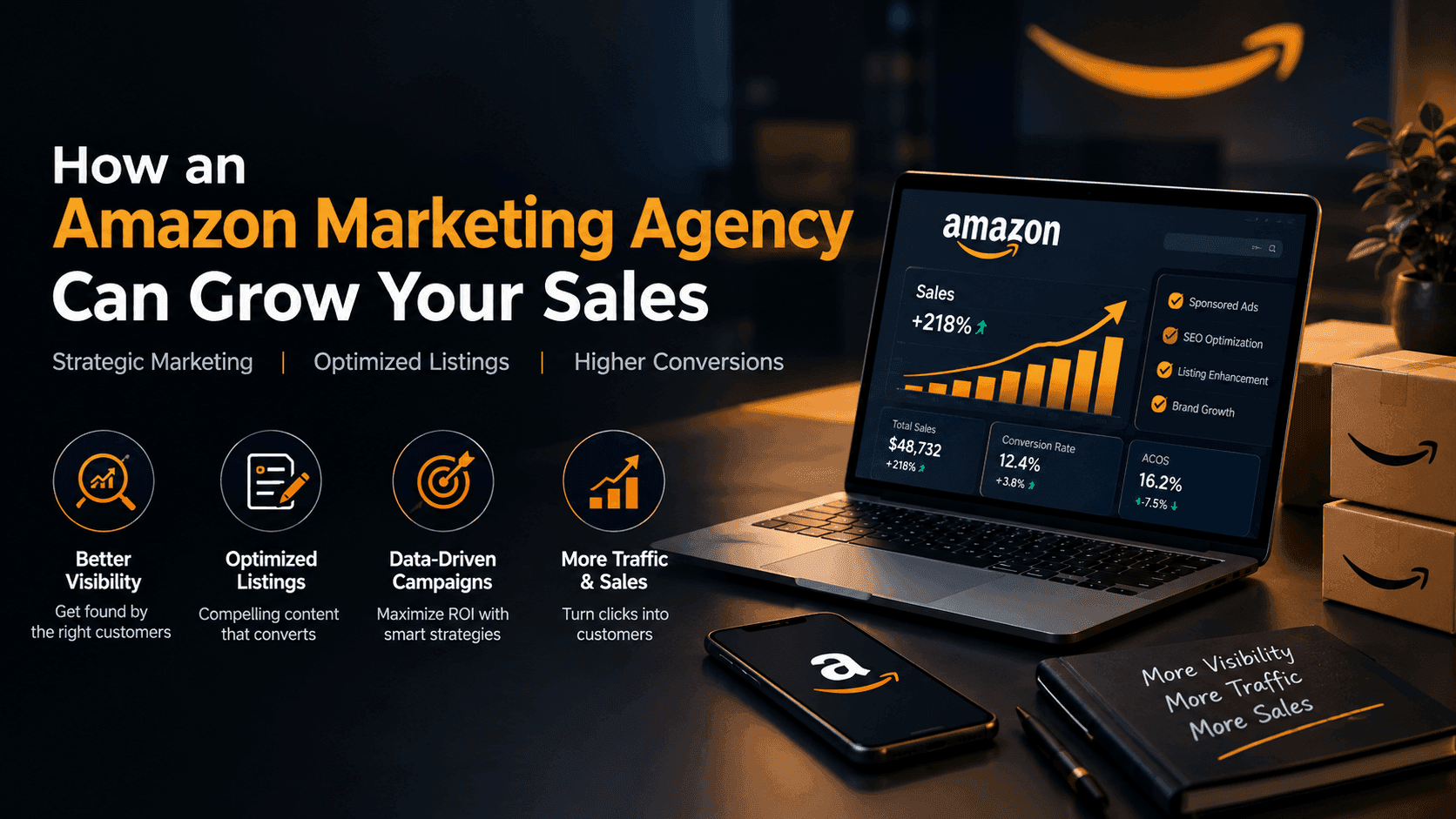
How an Amazon Marketing Agency Can Grow Your Sales
How an Amazon marketing agency helps brands grow sales with advertising, listing optimisation and account management, and what to look for in one.
Want to grow your digital presence?
Let's discuss how we can help your business.