 All Case Studies









Market context
How the UAE audience actually browses
Every figure is named next to its source, so this section is useful whether or not you ever speak to us.
Reach and connectivity
Source: DataReportal, Digital 2025: The United Arab Emirates, January 2025
Internet penetration99%
11.1 million people were using the internet in the UAE at the start of 2025, a penetration rate of 99.0 percent.
Social media identities100%
11.3 million social media user identities in January 2025, equal to 100 percent of the population.
Population growth year on year
The population reached 11.2 million and grew by 376 thousand, or 3.5 percent, in the year to January 2025, with a median age of 31.6.
Devices and discovery
Sources: StatCounter GlobalStats, United Arab Emirates, July 2026 (device and search share); International Trade Administration, UAE eCommerce Country Commercial Guide (cross-border share)
Web traffic from mobile59%
Mobile 59.35 percent, desktop 40.02 percent, tablet 0.63 percent in July 2026. Desktop is still large enough that a mobile-only build loses money.
Google share of UAE search96%
Google held 95.93 percent of UAE search in July 2026, Bing 2.47 percent. Technical SEO decisions here are effectively Google decisions.
Purchases from overseas vendors58%
UAE shoppers make 58 percent of their online purchases from overseas vendors, so your site competes with global storefronts on trust.
The regulatory frame
A Dubai website sits inside three overlapping rule sets: federal data protection, federal consumer protection with its Arabic language requirement, and whichever free zone or mainland authority licensed your company.
441.89 Mbps
Median mobile download speed, early 2025 (Ookla, via DataReportal)
0.6%
Share of websites whose content language is Arabic (W3Techs, August 2026)
46
Free zones across the UAE (UAE Embassy, Washington DC)
9%
Corporate tax above AED 375,000 of taxable profit (UAE Ministry of Finance)
The gap worth exploiting: Arabic is the content language of only 0.6 percent of websites W3Techs can identify, while UAE consumer rules expect consumer-facing information in Arabic. A properly built bilingual site is still unusual in most Dubai sectors.
What Arabic RTL changes in your WordPress build
Right-to-left is a layout, typography and markup task, not a translation task. It is where most Dubai WordPress projects quietly fail.
Direction belongs in the markup
dir=rtl, not a stylesheet rule W3C internationalisation guidance is explicit that base direction belongs in HTML, not CSS. Setting dir=rtl on the document right-aligns blocks, flows bidirectional text correctly, places punctuation properly, reverses table column order and starts form inputs on the right.
Logical CSS, not a mirrored stylesheet
margin-inline-start, not margin-left CSS logical properties define spacing relative to writing direction rather than physical sides. Using margin-inline-start, padding-inline-end and inline-size means one stylesheet serves both languages. Themes that hardcode margin-left need a parallel rtl.css that drifts out of sync.
Mixed Latin and Arabic strings
The bidi algorithm decides, not you Product codes, brand names and AED prices are Latin runs inside Arabic sentences, and the Unicode bidirectional algorithm reorders them by base direction. W3C recommends dir=auto for dynamic fields and the bdi element to isolate segments needing their own directional analysis.
Arabic typography is its own problem
Line height, numerals, font payload Arabic script is connected and taller in the vertical axis than Latin at the same nominal size, so line heights, button padding and card heights tuned for English break when the Arabic string lands. The Arabic web font is a second payload that must be subset and preloaded.
Components that mirror, and those that must not
Carousels, icons, progress, numerals Mirroring a page is not the same as mirroring every part of it. Carousels, progress indicators, breadcrumbs and directional icons have to flip with the reading order, while logos, media controls, phone numbers and Latin product codes stay as they are. We audit each interactive component for direction awareness rather than trusting a theme to have done it. The multilingual plumbing is a one-time structural decision: crawlable Arabic URLs paired reciprocally with their English equivalents in hreflang and in the sitemap.
Arabic on a phone, tested on a phone
Where the Arabic string breaks the layout Arabic strings rarely match the English length they replaced, so navigation labels wrap, buttons grow and cards fall out of alignment at exactly the widths nobody checked. With 59.35 percent of UAE web traffic on mobile, both directions get walked through on real handsets at real widths, with the Arabic web font loading rather than falling back to a system face.
Rules a UAE website has to followScope comparison
Sources: UAE Government portal on Federal Decree-Law No. 45 of 2021; DIFC Data Protection Law No. 5 of 2020; ADGM Data Protection Regulations 2021; K&L Gates alert on Federal Law No. 15 of 2020 and Cabinet Decision No. 66 of 2023; UAE Ministry of Economy and Tourism on Federal Decree-Law No. 14 of 2023.
| Feature | Generic WordPress build | Build scoped for the UAE |
|---|---|---|
| Arabic on the site | Machine translation bolted on, layout untouched | dir=rtl in the markup, mirrored layout, Arabic typography, reviewed copy |
| CSS structure | margin-left and float hardcoded, RTL patched later | Logical properties, so one stylesheet serves both directions |
| Consumer information | English-only terms, policies and invoices | Arabic provided for consumer information, advertisements and contracts, or another language in addition to Arabic, per Cabinet Decision No. 66 of 2023 in effect since October 2023 |
| Personal data | A copied GDPR cookie banner | Consent, correction and restriction rights mapped to Federal Decree-Law No. 45 of 2021, in force since 2 January 2022 |
| Financial free zone entities | Not considered | Licence checked first, then DIFC Law No. 5 of 2020 or the ADGM Data Protection Regulations 2021 applied in place of the federal regime, with consent wording and privacy notices rewritten to match |
| Search engineering | A keyword list | Crawlable bilingual URLs, hreflang pairs and Core Web Vitals work aimed at Google, at 95.93 percent of UAE search in July 2026 |
| Feature | Generic WordPress build |
|---|---|
| Arabic on the site | Machine translation bolted on, layout untouched |
| CSS structure | margin-left and float hardcoded, RTL patched later |
| Consumer information | English-only terms, policies and invoices |
| Personal data | A copied GDPR cookie banner |
| Financial free zone entities | Not considered |
| Search engineering | A keyword list |
Engagement
How a Dubai WordPress project runs
No timeline is promised here. What is fixed is that the first question is which UAE regime your licence puts you under, because that answer shapes everything after it.
- 1Free audit and entity check
We audit the site or brief for mobile performance, indexation, Arabic readiness, forms, tracking and visible data protection gaps, and you get the findings either way. In the same pass we establish your entity type, because a DIFC company sits under Law No. 5 of 2020, an ADGM company under the Data Protection Regulations 2021, and everyone else under Federal Decree-Law No. 45 of 2021.
- 2Information architecture in two directions
Sitemap, URL structure and language strategy come before design: which pages exist in Arabic, how hreflang is paired, and what happens to search, filters and forms when the page mirrors. Consumer-facing pages such as product information, terms and invoices are scoped for Arabic at this point rather than retrofitted. Fixing this later is the most expensive rework in a bilingual build.
- 3Design and build on logical CSS
Design is reviewed in both directions before development starts. The theme is built on inline logical properties so one stylesheet serves Arabic and English, directional components are flipped deliberately, Arabic web fonts are subset and preloaded, and content is modelled so your team edits both languages without touching code.
- 4Compliance review, testing and handover
Consent capture, privacy notice scaffolding, cookie behaviour and Arabic consumer information are reviewed against the regime identified in step one, with your legal advisor, since we build websites and do not give legal advice. Then real-device testing in both directions, Core Web Vitals, payment paths and analytics, recorded handover walkthroughs, and monitoring afterwards that reports Arabic and English pages separately, because they rarely perform the same.
What is in and out of scope
Scope limits on a Dubai engagement
Dcrayon has no Dubai office and no UAE staff. The team is in Delhi, India, and since the UAE runs on Gulf Standard Time at UTC+04:00 with no daylight saving while India runs at UTC+05:30, Delhi is one hour and thirty minutes ahead of Dubai all year, so a UAE working morning is a normal Delhi working morning. What that buys you is the build and the running of it, scoped against the published UAE rules. What it does not buy you is a local legal opinion, a bank introduction or company formation, so you keep your own PRO, accountant and legal advisor, and they are the ones who confirm whether your licence puts you under the federal regime, DIFC or ADGM. We write the consent flows, the bilingual privacy notice scaffolding and the Arabic consumer information to match whichever answer they give. Every engagement has one named human lead who answers for it. On the build-versus-hire question, Indeed UAE reported an average web developer salary of AED 3,748 per month across 282 self-reported salaries as of 25 July 2026, before hiring, licensing and visa costs.
Web builds we have shipped
Real projects from our web development practice, with the numbers as recorded. Nothing here is a Dubai-specific claim unless the case study says so.
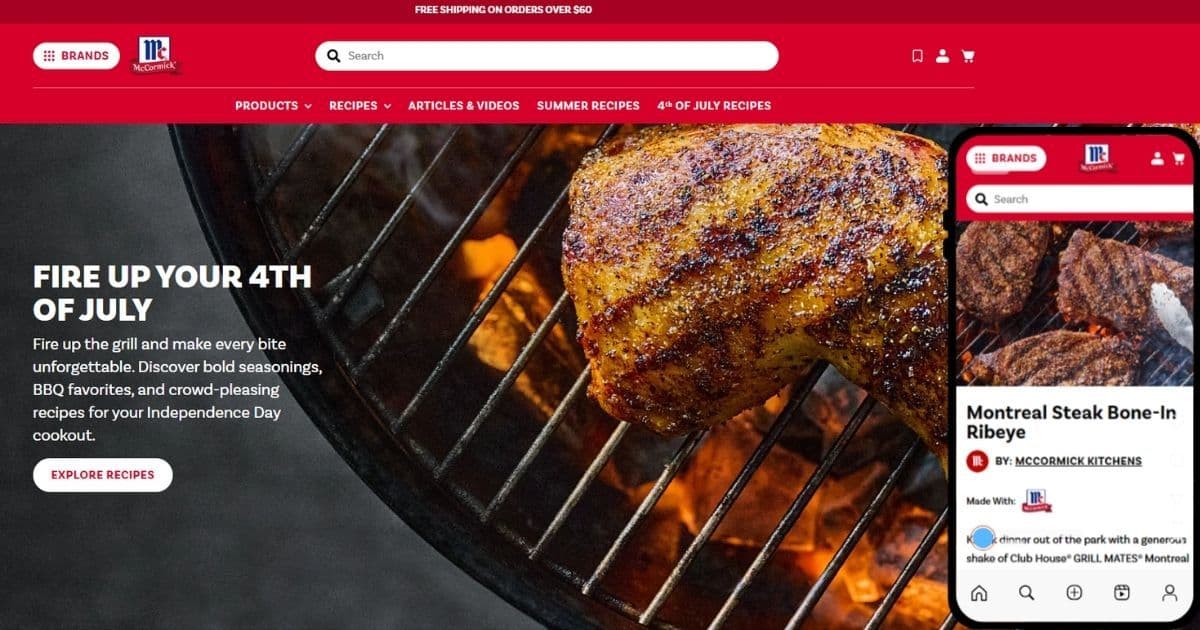
McCormick & Company
What changed on McCormick's front endThe front end now loads non-essential scripts after the main content, runs third-party tags through...
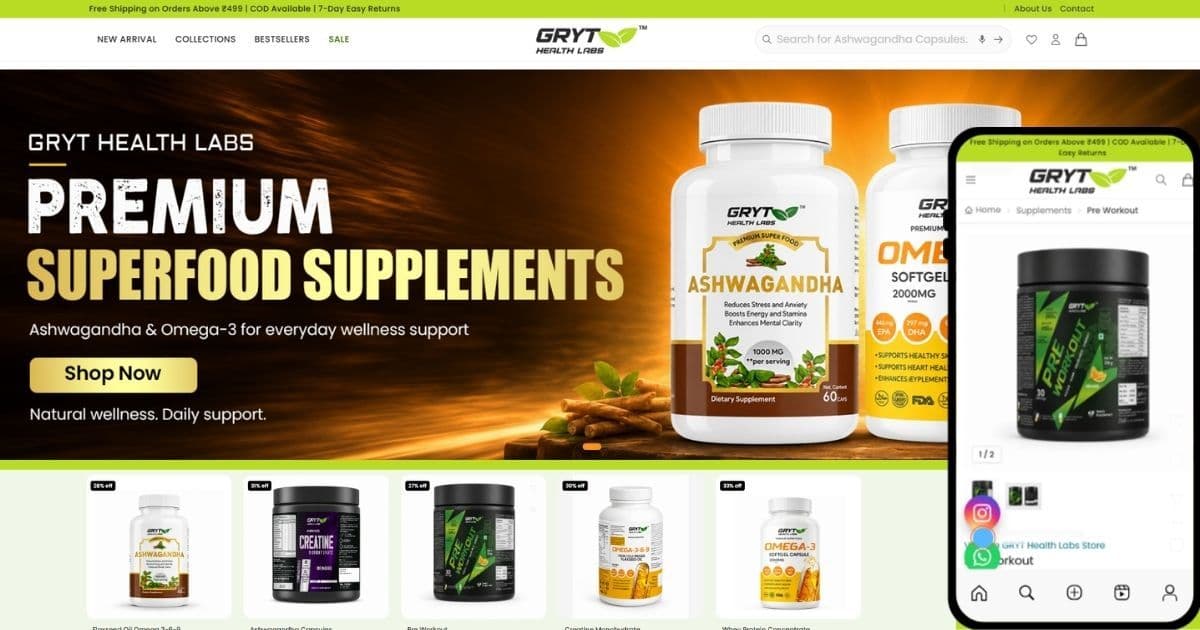
GRYT Health Labs
What GRYT shoppers can do on the storeShoppers can check the brand's licence and ownership details, compare single units with packs of...
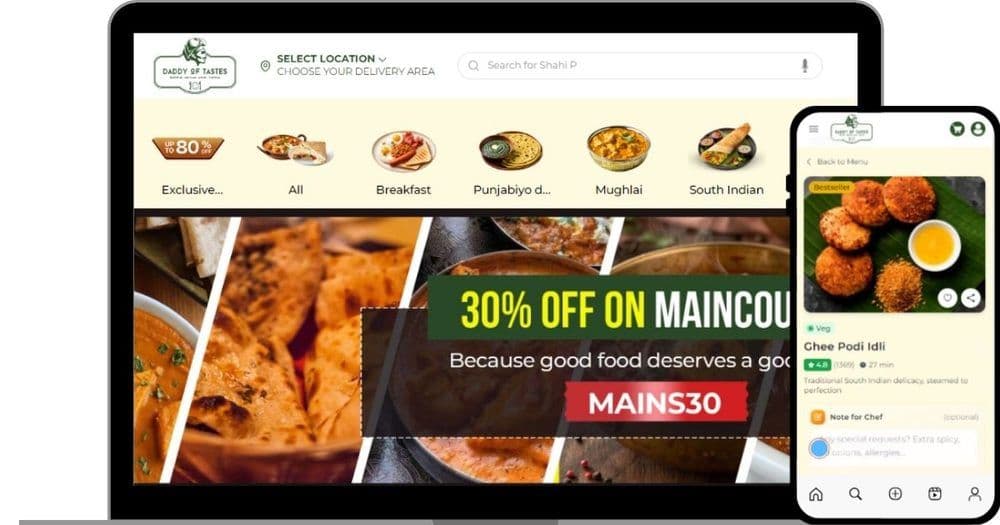
Daddy of Tastes
What the Daddy of Tastes kitchens and riders work withCustomers can order from the full menu, pin their exact location, pay through...
Instacertify
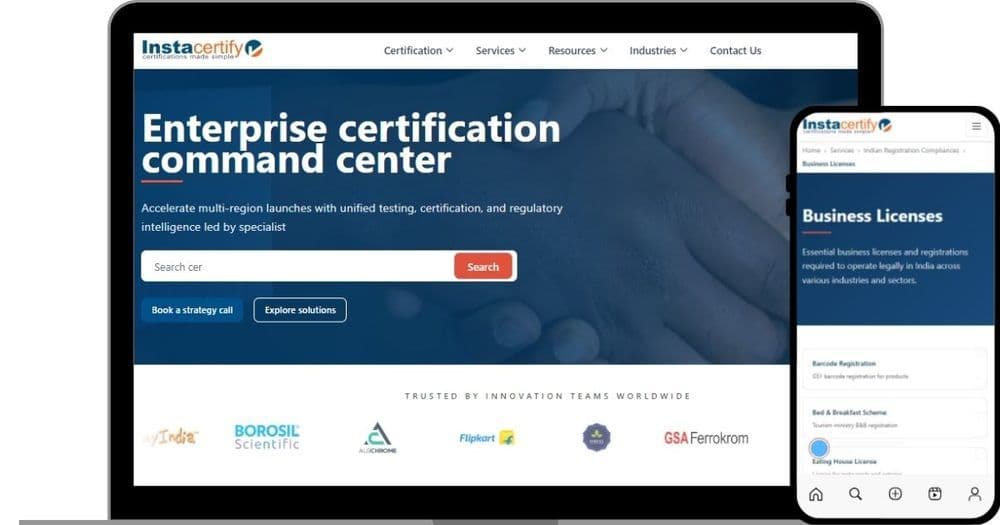
What Instacertify's visitors could doVisitors could search for a certification from the first screen, see two clear next steps, and move...
Northern Tile Distributors
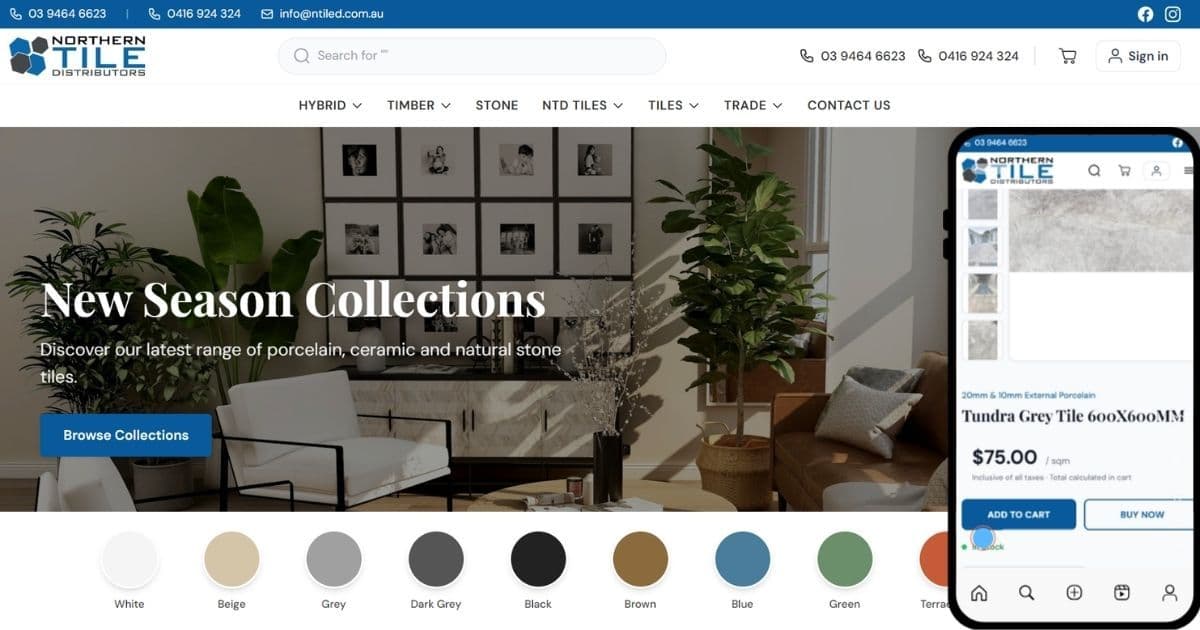
The storefront delivers a clean shopping experience on both desktop and mobile. Page load times improved significantly, the add-to-cart rate...

RAA Logistics
What RAA's customers and team have nowProspective customers can find the exact service they need, read what it covers, see who runs the...



Questions
Dubai WordPress questions, answered
For consumer-facing material, Arabic matters. Under Federal Law No. 15 of 2020 and its executive regulations in Cabinet Decision No. 66 of 2023, effective October 2023, information, advertisements and contracts entered into with a consumer must be in Arabic, or in another language in addition to Arabic. That reaches product information, terms and invoices. Most Dubai businesses therefore run a fully bilingual site rather than drawing a line around which pages count. Confirm the specifics for your sector with your own legal advisor.
Most UAE businesses fall under Federal Decree-Law No. 45 of 2021 on the Protection of Personal Data, effective 2 January 2022. It prohibits processing personal data without the owner's consent except in defined cases, gives individuals the right to have inaccurate data corrected and to restrict or stop processing, sets cross-border transfer requirements, and applies to processing carried out inside or outside the country. A DIFC entity is instead under DIFC Data Protection Law No. 5 of 2020, and ADGM entities sit under the ADGM Data Protection Regulations 2021. Which regime applies changes your consent wording, your privacy notice and your data protection officer arrangements, so we establish it at the audit stage and you confirm it with your legal advisor.
Ownership and hiring depth. WordPress runs 41.2 percent of all websites per W3Techs in August 2026, so your team can be trained on it and your next agency can pick it up instead of inheriting something only we understand. It also takes right-to-left at the theme level, which a hosted platform may not let you touch. It is not always right: if you need heavy transactional logic or have unusual hosting constraints, we say so at the audit stage rather than after you have paid for a build.
It is not a plugin. Setting base direction in the markup with dir=rtl is the W3C-recommended approach, and W3C guidance specifically warns against applying base direction through CSS. We build the theme on CSS logical properties so a single stylesheet serves both directions instead of a mirrored rtl.css that goes stale. Mixed Latin and Arabic strings, which is every price and product code, get dir=auto or bdi isolation so the bidirectional algorithm does not reorder them. Our own site already publishes Arabic content.
Sometimes. The UAE has 46 free zones according to the UAE Embassy in Washington DC, from Jebel Ali Free Zone, established in 1985, to sector-specific zones. Your licence shapes who you can invoice, which affects how you describe services and what your checkout should process. On tax, the UAE Ministry of Finance set corporate tax at 9 percent with a 0 percent rate on taxable profits up to AED 375,000, for financial years starting on or after 1 June 2023.
Mobile and desktop performance on real devices, Core Web Vitals, indexation and crawl issues, hreflang and Arabic readiness, form and conversion path checks, tracking setup, and visible data protection and consumer information gaps. You get the written findings whether or not you hire us. If your current site needs fixes rather than a rebuild, that is what the audit will say.
Request your free UAE website audit
Tell us your site, your entity type and whether you need Arabic. We come back with findings, not a template proposal.
Get a free audit of your Dubai website
Bilingual WordPress engineering with right-to-left handled in the markup and the stylesheet, scoped against Federal Decree-Law No. 45 of 2021 or the DIFC and ADGM regimes, whichever your licence puts you under.