 All Case Studies





How to Recover from a Google Algorithm Update and Improve Your Search Rankings
July 30, 2026 | 6 min read

Yash
Google algorithm updates aim at improving the quality of search results by rewarding those websites that offer useful, relevant and trustworthy content. Despite the fact that these updates have been beneficial for many users because they enable them to find good information, they can still lead to a drastic reduction in traffic for companies.
Do you have a sudden drop in traffic or keyword rankings? Do you find yourself asking, "How to recover from a Google algorithm update?" If so, then you're definitely not alone.
Each year, Google introduces various core updates as well as changes to the algorithm that affect millions of websites globally. It is not always the case that your website has been penalized when you get a ranking drop. Many times, it is just a matter of the new update favoring some other websites over yours.
And the best part is that recovery from a Google algorithm update is indeed achievable. Yet, it will take some time and effort on the part of your business to make this happen.
As a trusteddigital marketing agency in NSP, we have helped services to different companies to overcome their setbacks due to Google algorithm changes through website optimization, building a solid foundation for SEO and creating Google-friendly content.
Here are the most effective strategies to recover your rankings after a Google algorithm update.
1. Identify Which Google Update Affected Your Website
The first step is understanding what actually caused the ranking drop.
Google releases different types of updates, including:
- Core Updates
- Helpful Content Updates
- Spam Updates
- Product Reviews Updates
- Link Spam Updates
Compare the timing of the decline in traffic to the schedule for updates from Google. This will help identify if the loss in rankings is related to an update or some other problem.
Use tools such as:
- Google Search Console
- Google Analytics 4
- SEMrush
- Ahrefs
Knowing what kind of update took place makes it easier to move in the right direction.
2. Analyze Which Pages Lost Rankings
Not every page is usually affected during an algorithm update.
Review your website and identify:
- Saw a drop in traffic
- Had keywords ranking dropped
- Have seen a reduction in impressions
- Were high-performing and unchanged
Google Search Console is among the best tools to compare performance before and after the update.
After finding out which pages were affected, look for common themes. Such as:
- Thin content
- Outdated information
- Poor user engagement
- Weak backlinks
- Duplicate pages
Knowing exactly what declined makes recovery much easier.
3. Improve Content Quality
Google increasingly rewards websites that publish useful, original, and people-first content.
Ask yourself these questions:
- Does this page fully answer the user's query?
- Is the information accurate and up to date?
- Is the content unique?
- Does it provide real value?
- Would someone bookmark or share this page?
Avoid creating content simply to rank for keywords.
Instead:
- Make thin posts longer
- Freshen old information
- Use statistics and examples
- Provide a Q&A section
- Increase readability
- Remove unnecessary repetition
User-friendly content always wins after Google core updates.
4. Strengthen Your E-E-A-T Signals
Google places significant importance on Experience, Expertise, Authoritativeness, and Trustworthiness (E-E-A-T).
While E-E-A-T is not a ranking signal, it does play an important role in evaluating the quality of websites.
Improve your website by adding:
- Detailed author profiles
- Business information
- Contact details
- Customer reviews
- Testimonials
- Case studies
- Certifications
- Industry awards
In the case of businesses providing professional services, showing their true expertise is very important.
5. Fix Technical SEO Issues
Even excellent content may struggle if your website has technical problems.
Perform a complete SEO audit and check for:
- Broken links
- Crawl errors
- Slow page speed
- Mobile usability issues
- Duplicate content
- Missing meta tags
- Indexing problems
- XML sitemap errors
Google prefers those sites which have good coding and can be easily crawled.
Routine technical auditing helps to avoid minor problems turning into major ranking factors.
6. Improve User Experience
Google wants to rank websites that provide a positive experience for users.
Improve user experience by:
- Reducing page load time
- Simplifying navigation
- Using clear headings
- Adding internal links
- Improving page design
- Optimizing for mobile devices
A better user experience can result in good engagement signals that contribute to SEO success in the long term.
7. Review Your Backlink Profile
Backlinks remain one of Google's strongest ranking signals.
However, low-quality or spammy backlinks may negatively affect your website.
Use SEO tools to review:
- Toxic backlinks
- Lost backlinks
- New referring domains
- Anchor text distribution
Focus on earning high-quality backlinks through:
- Guest posting
- Digital PR
- Industry directories
- Valuable content
- Case studies
- Original research
Do not engage in any backlink purchase or link schemes, since it is against the Google policy.
8. Refresh Old Content Regularly
One of the easiest recovery strategies is updating existing content.
Google prefers fresh, relevant information, especially in competitive industries.
Update older articles by:
- Adding recent statistics
- Including new examples
- Improving keyword optimization
- Updating screenshots
- Removing outdated information
- Expanding sections that lack depth
Refreshing content can often help improve rankings without having to create an entirely new page.
9. Monitor Google Search Console Frequently
Recovery doesn't happen overnight.
Track your website regularly using Google Search Console.
Monitor:
- Keyword rankings
- Clicks
- Impressions
- Average position
- Indexed pages
- Core Web Vitals
- Manual actions
Small improvements over several weeks usually mean your recovery plan is working.
You need to be patient since it can take some time for Google to evaluate your website again.
10. Build a Long-Term SEO Strategy
Make sure that you do not commit errors in SEO like keyword stuffing, buying backlinks, generating machine content, duplicating web pages, and removing certain parts from your website. This could have a very bad effect on you as far as your rankings are concerned.
Instead, what you should be doing is creating a website that will add real value to your users. In order to achieve successful SEO in the long run, it is necessary to write useful content, perform decent technical SEO, earn high-quality backlinks, give good user experience, regularly update your website, and establish yourself as an authority in your field.
Common Mistakes to Avoid After a Google Algorithm Update
Many businesses make recovery even harder by reacting too quickly.
Avoid these common mistakes:
- Overlooking technical SEO aspects
- Deleting content without analyzing it
- Copying competitors’ content
- Being obsessed with every single SEO trend
- Anticipating quick recovery
- Focusing only on keywords instead of user intent
Successful recovery needs proper planning and constant improvement.
How a Digital Marketing Agency in NSP Can Help
Recovering from a Google algorithm update requires technical expertise, data analysis, and ongoing optimization.
A professional marketing agency in NSP can help by:
- Conduct a Comprehensive SEO Audit
- Assess Website Performance and SEO Effectiveness
- Improve Content to Boost Rankings
- Fix Technical SEO Problems
- Improve Core Web Vitals to Enhance User Experience
- Get High-Quality and Authoritative Backlinks
- Analyze Keyword Performance
- Formulate an Effective SEO Strategy
Unlike guessing what might be wrong based on assumptions, the SEO professionals use facts to find a solution to the problems.
Overall Summary
However, a change in Google algorithms will not always result in a downfall of your website’s ranking. While it may irritate you that there has been a decrease in traffic, remember that it is also an opportunity to improve the ranking of your website.
This includes finding the problematic pages, making them better, fixing any SEO issues, improving user experience, building up the authority of your site and monitoring its performance.
Just remember that SEO is an investment and should not be viewed as a short-term activity. Websites which consistently produce high quality content and focus on user experience will survive changes in algorithms.
In case your website’s ranking has been affected due to the latest Google algorithm update, collaboration with an established digital marketing agency in NSP can help you identify the reason for the same and come up with a strategy to restore them.
Related Articles
More insights from the Dcrayon desk.
Amazon Account Management Services for Better Sales, Visibility, and Growth
Amazon is an extremely competitive site, and there could be thousands of sellers selling items that are the same. Listings, inventory, pricing, and account performance can have minor issues which can impact the overall shopping experience and sales opportunities.
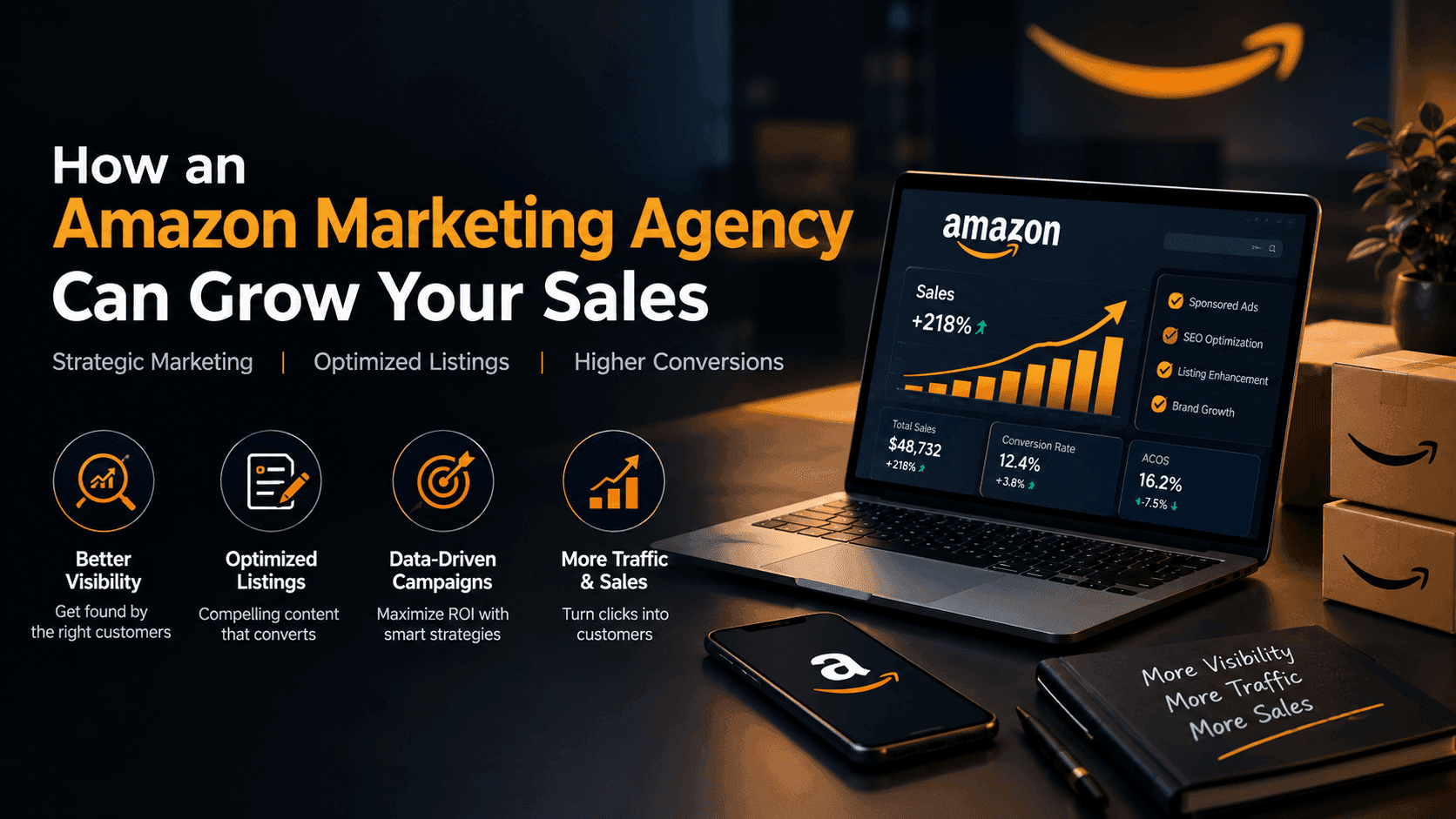
How an Amazon Marketing Agency Can Grow Your Sales
How an Amazon marketing agency helps brands grow sales with advertising, listing optimisation and account management, and what to look for in one.

How to List Your Fashion Brand on Myntra (Marketplace vs EBO)
How to list your fashion brand on Myntra: choosing between the marketplace and EBO models, preparing your catalogue and meeting Myntra's requirements.
Want to grow your digital presence?
Let's discuss how we can help your business.