

Traceable findings register
Every finding lands in a register with a CVSS score, the affected asset, a proof of concept, remediation steps, and a retest column.
Two recent information security audit engagements. Findings register and remediation status shared under MNDA on a scoping call.

Cybersecurity and Compliance engagement,
Information security audit lead
Dcrayon ran our security audit against ISO 27001 Annex A and CIS Benchmarks, not a generic checklist. Every finding came with an owner, a severity rating, and a fix we could verify.
Open findings by severity, shared on scoping call
Critical findings remediated and re-tested
Information security audit: control gap assessment against ISO 27001 and NIST CSF, config and access review, prioritized findings register with named remediation owners.
Read Cybersecurity and Compliance engagement's Case Study
Mid-market cybersecurity and compliance brand,
Security audit and penetration testing lead
Our last audit was a PDF nobody actioned. Dcrayon gave us a live findings register, mapped each control to CIS and SOC 2, and re-tested every fix we closed.
Controls passing after remediation, on scoping call
Gaps closed against ISO 27001 Annex A
Security audit paired with penetration testing and policy review. A baseline scan with Nessus plus manual config checks set the starting posture across the systems in scope.
Read Mid-market cybersecurity and compliance brand's Case StudyHOW A DCRAYON SECURITY AUDIT RUNS

What comes standard in a Dcrayon security audit
Every finding lands in a register with a CVSS score, the affected asset, a proof of concept, remediation steps, and a retest column.

Our tooling watches cloud config drift against CIS benchmarks and flags new public buckets, open ports, and over-privileged IAM roles.

We rank issues by real exploitability and business impact, so you fix the handful an attacker would use first, not a raw scanner dump.

Findings map to ISO 27001 Annex A, SOC 2, and GDPR controls, so one audit feeds both your certification evidence and your security backlog.
A baseline risk score, a prioritised fix plan, and a retest that confirms each closed issue actually stays closed.
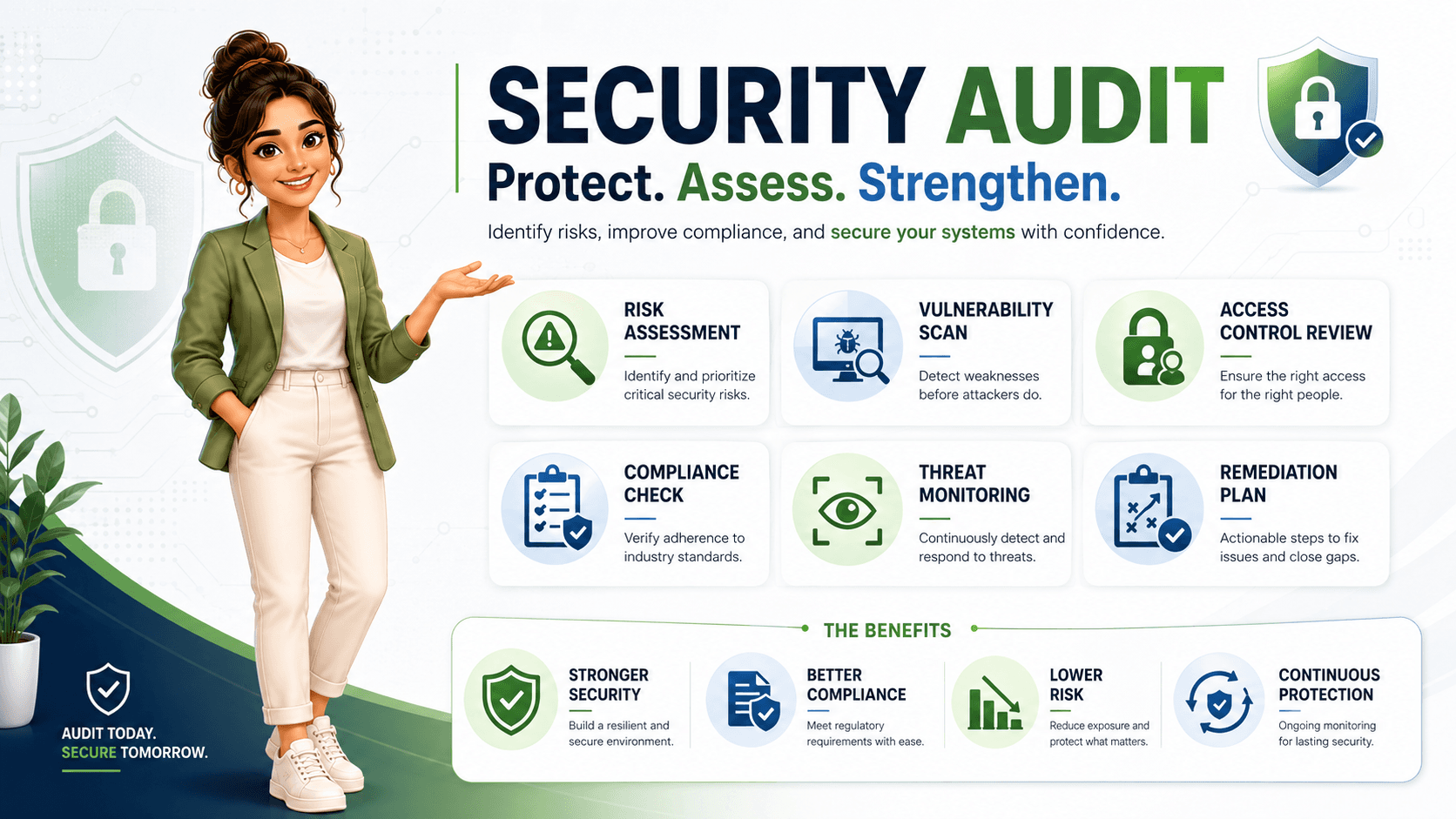
A 150-point security review across five areas. The audit checks your external attack surface, access controls, patch levels, encryption, and logging against OWASP and ISO 27001 baselines. Free on every proposal call.
A ranked fix plan that puts the highest-risk findings first and names an owner and a verification step for each one.

In-house tooling that runs SAST, DAST, and dependency scans, then drafts a remediation roadmap your finance team can budget against.
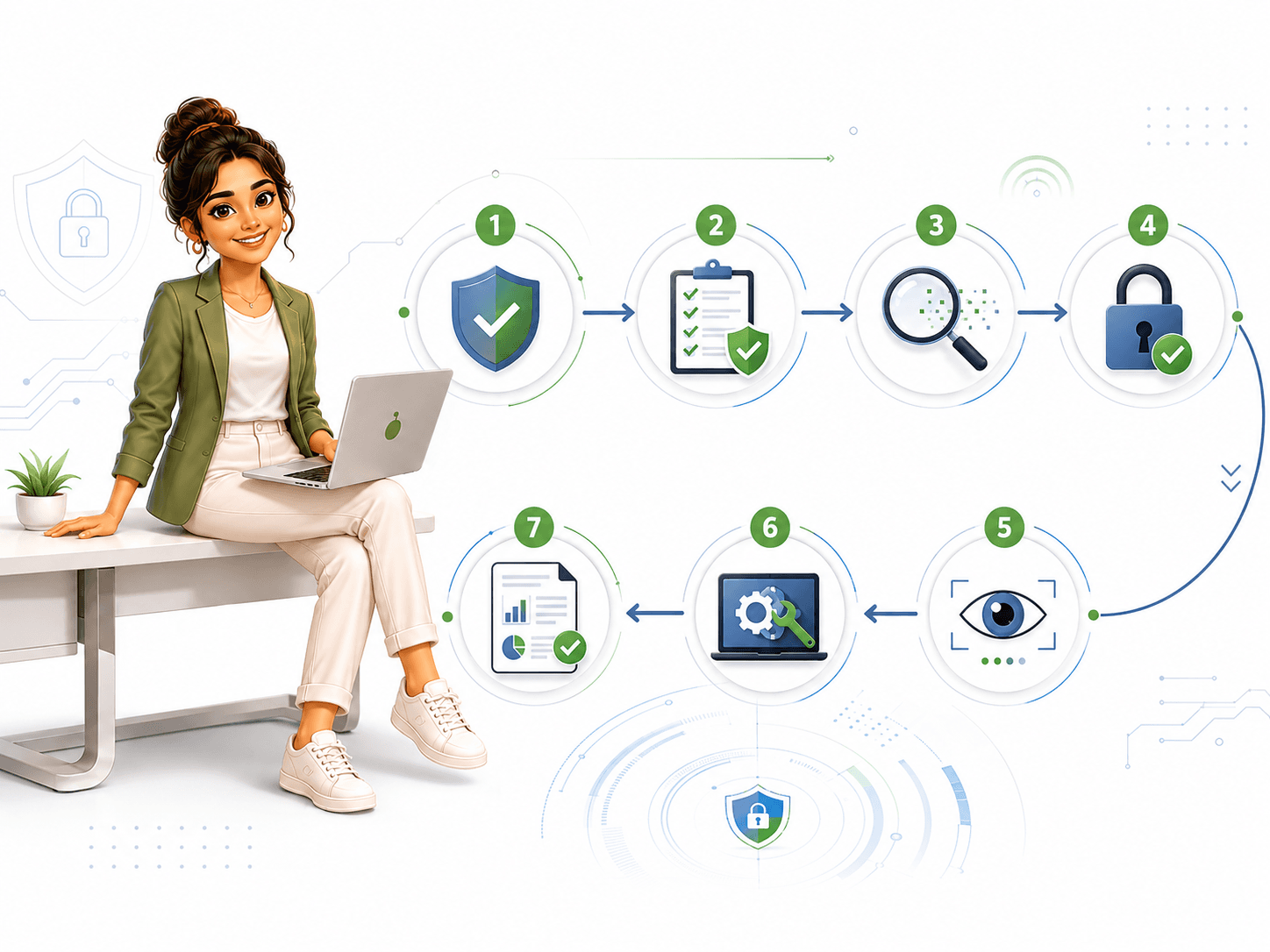
Three repeatable steps that keep your security posture improving audit after audit.
A free Dcrayon Score readout in one business day. We run an authenticated vulnerability scan, rank findings by CVSS severity, and give you one 0-100 number plus the full gap list. No follow-on commitment.
A written 90-day remediation plan tied to one risk metric you pick, such as open critical findings. A senior security architect owns the testing, and every SoW lets either side stop. No annual lock-in.
Weekly working sessions with your senior architect and a monthly readout your finance team can read. Each cycle builds on the last: patch and config fixes first, then a retest to confirm the critical findings are closed.
Sibling Dcrayon services inside the Cybersecurity and Compliance category. Programs clients often layer alongside Security Audit.

No trainees testing your systems for practice. The senior auditor who scopes your security audit runs the testing and signs the report.

Scanners catch the easy issues. Our auditors chain findings by hand to show what a real attacker could reach and what that access would cost you.

We follow CERT-In and OWASP testing guidance, so your audit report holds up with regulators, insurers, and enterprise procurement teams.

Two reports from one audit: a technical findings register for engineers, and a plain-English risk summary your board can act on.



Across our 60+ active solutions retainers, the median 12-month cost we measure for teams running without a structured security audit and compliance program lands in the Rs 6L to Rs 90L band. Book the scoping call to size yours.
A no-cost Dcrayon Risk Score across five security domains
A written remediation plan ranked by exploit risk

It begins with a scoping call to agree the assets in range, the testing windows, and the rules of engagement. Post-incident work is scoped with priority and clear escalation.
Both. Some clients hand us the whole security audit and compliance function; others keep an internal team and use us as the senior architect and escalation point for penetration testing and remediation. We scope per account.
Most security audit engagements start at Rs 4 to 8 lakhs per month in India, or USD 6 to 15 thousand per month globally. One-off audits are scoped lower.
Yes. Every proposal call includes a no-cost Risk Score readout across five security domains. No follow-on commitment is required.