

Idempotent, replayable syncs
Every connector ships with idempotency keys and a dead-letter queue, so a failed message replays cleanly without creating duplicate records across your systems.
Two recent integration builds, from ERP to CRM sync to voice-response routing. Full metrics under MNDA; open on a scoping call.

IT Solutions engagement,
Integration engineer, ERP and CRM connectors
Dcrayon mapped every field between our ERP and CRM, then built the middleware so orders stopped falling between systems. We now report one reconciled number.
Records synced per hour, shared on scoping call
First clean two-way sync live in production
System integration build: a senior integration engineer maps each data flow, wires connectors on iPaaS tooling like Workato or MuleSoft, and reviews connector health with us weekly.
Read IT Solutions engagement's Case Study
Mid-market it solutions brand,
Integration engineer plus data mapping lead
Orders, tickets and inventory sat in three systems that never agreed. Dcrayon built the connectors and reconciled the records so every team reads the same integrated data.
Manual re-keying hours removed, shared on call
First reconciled dataset across all systems
System integration build paired with a cleanup of the connected apps. A field-level mapping audit across the integrated data systems set the baseline before any connector went live.
Read Mid-market it solutions brand's Case StudyHOW DCRAYON SYSTEM INTEGRATION WORKS

Default capabilities on every Dcrayon integration engagement
Every connector ships with idempotency keys and a dead-letter queue, so a failed message replays cleanly without creating duplicate records across your systems.

Dcrayon AI compares record counts and field checksums between source and target on a schedule, flagging drift before ops teams notice mismatched integrated data systems.

We tag integration compute and API call volume, then report cost per thousand synced records, so middleware spend stays visible as transaction counts climb.

Every connector uses scoped OAuth2 tokens, encrypted payloads, and audit logging, with SOC 2 and GDPR-aware controls applied to data crossing each system boundary.
Score, Sequence, Repair. A diagnostic of your current interfaces, a build plan, and the monitoring toolkit we keep running after cutover.
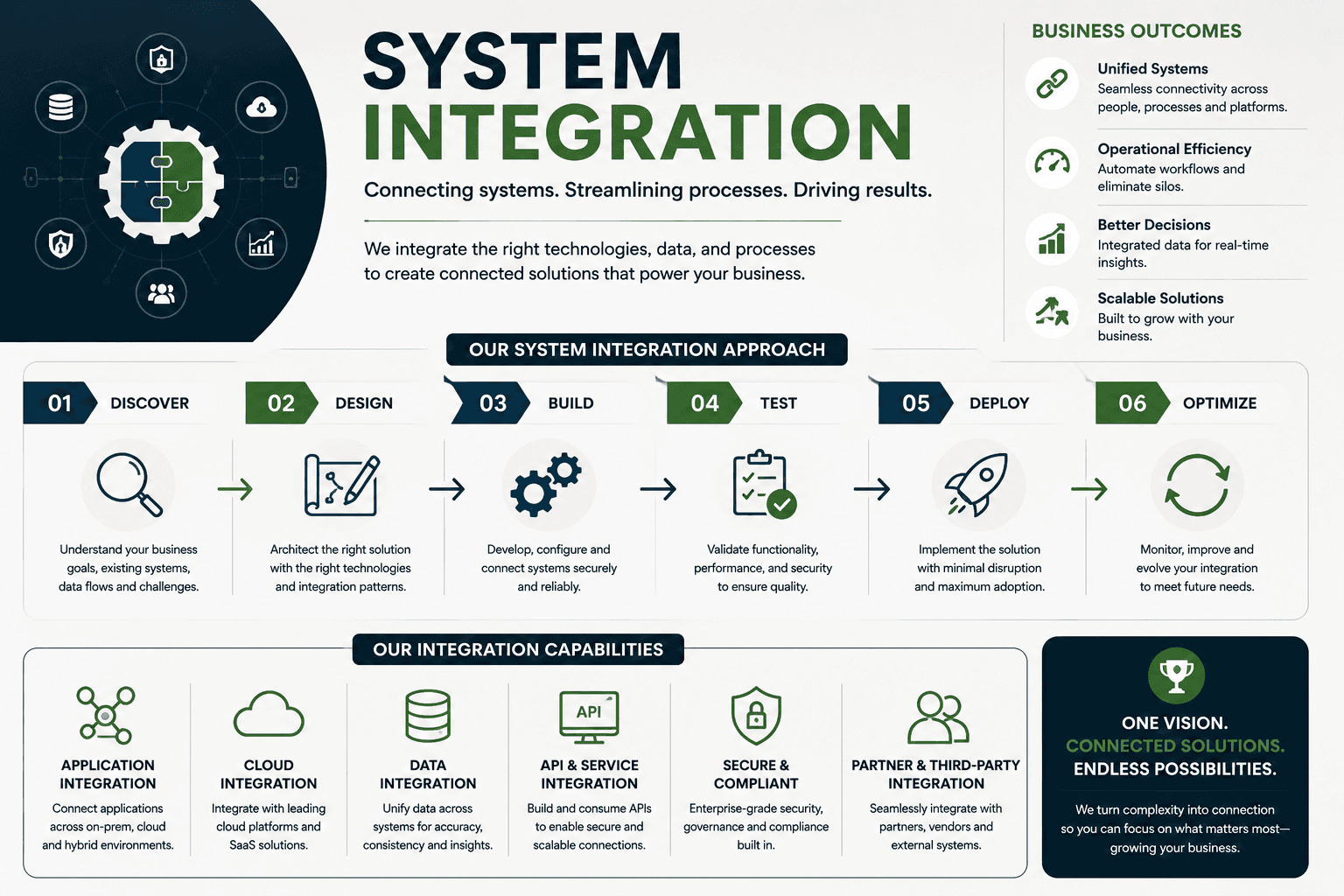
We map every place one system hands data to another: your ERP, CRM, IVR, and reporting stack. The review checks API contracts, message queues, retry and error handling, field-level data mapping, and where records get dropped or double-entered. Free on every proposal call.
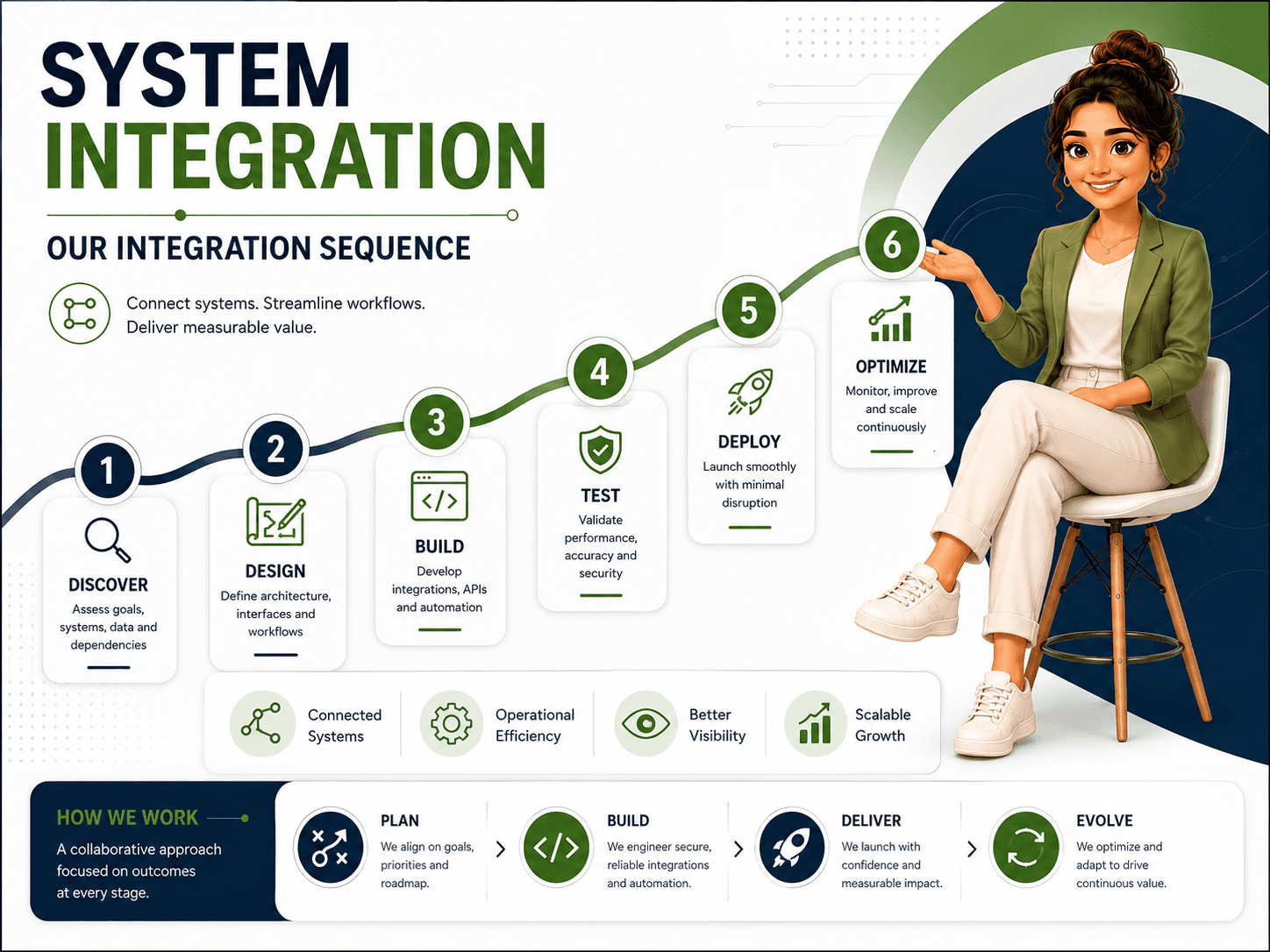
A build plan that sequences integration work back to one operational metric you pick, such as order-to-cash sync latency or reconciliation accuracy.
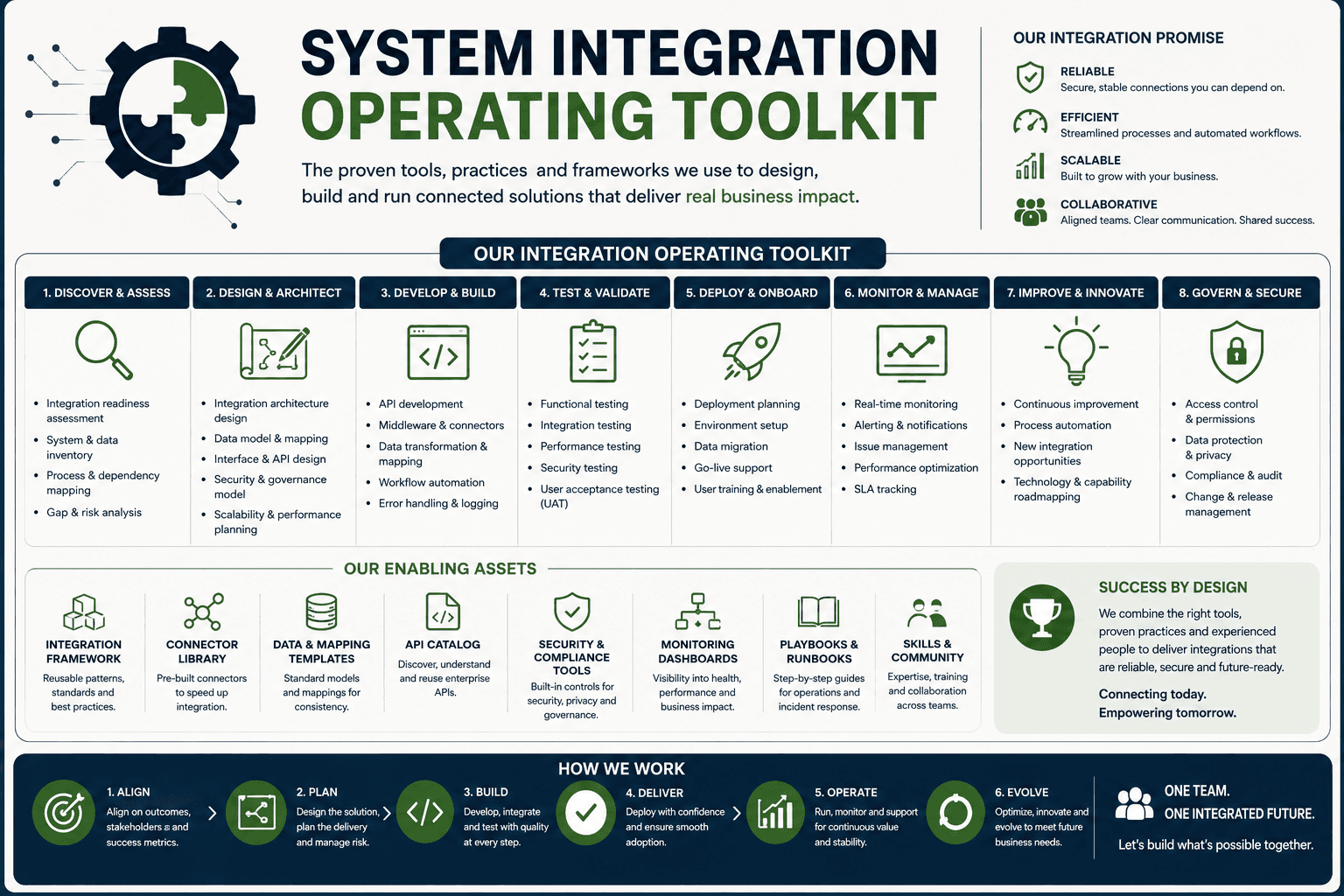
An internal toolkit that maps every source and target field, detects schema drift, and generates a prioritised remediation list your finance team can budget.
Three repeatable plays that make your connected systems steadier with each cycle.
A free integration audit that follows each handoff across your integrated data systems, from the ERP through the CRM to the warehouse. You get one score from 0 to 100, a map of every broken or manual data flow, and the records at risk. No follow-on commitment.
A written integration plan tied to one operational metric you pick, such as orders synced with no manual re-keying. A senior integration architect owns the design and the API contracts. Either side can end the SoW at any point; no annual lock-in.
A weekly working session with your integration architect and a monthly summary your finance team can read. Early cycles connect the systems and clean the field mappings; later cycles add monitoring and automate the handoffs people still run by hand.
Sibling Dcrayon services inside the IT Solutions category. Programs clients often layer alongside System Integration.

No junior engineers practicing on your production connectors. The architect who maps your integration owns it through cutover and support.

A written diagnostic and fixed estimate of your integration scope, so planning does not stall while systems keep drifting out of sync.

Every integration ships with anomaly detection and reconciliation checks, so a broken sync surfaces in monitoring before it corrupts downstream records.

Weekly working sessions and a monthly report tied to one operational metric, written so finance and ops can read integration health without a translator.



Across our 60+ active solutions retainers, the median 12-month cost we measure for teams stitching systems together by hand and re-keying data across tools lands in the Rs 6L to Rs 90L band. Book the scoping call to size yours.
Free integration Score covering your five most fragile interfaces
Written build plan tied to one operational metric you pick

It begins with an interface audit and a mapped inventory of every source and target system, followed by a scoped SoW before any connector is touched.
Both. Some clients use us as their full integration team; others use us as senior architect and escalation alongside internal engineers. We scope per account.
Most integration engagements start at Rs 4 to 8 lakhs per month in India, or USD 6 to 15 thousand per month for global clients. Audit-only work starts lower.
Yes. We run a five-axis integration Score on the proposal call at no cost, with no follow-on commitment required.