

Change records in Azure DevOps
Every Azure change ships with a pull request, before and after Azure Monitor metrics, an updated runbook, and a Bicep or Terraform commit.
Two recent Azure cloud engagements. Full figures under MNDA; the workload detail comes out on a scoping call.

Cloud and Data engagement,
Azure platform owner
Dcrayon reworked our Azure setup around one cost-per-workload figure, not raw resource counts. Reserved instances and a clean landing zone gave us a number the board reads easily.
Monthly Azure spend tracked in Cost Management
Azure Advisor score movement
Azure engagement: Well-Architected review, a Bicep landing zone, and Azure Cost Management tagging so every subscription maps to an owner. Mutual exit clause at the first quarterly review.
Read Cloud and Data engagement's Case Study
Mid-market cloud and data brand,
Azure and AKS platform owner
Our Azure estate had drifted for over a year, subscriptions sprawling with untagged resources. Dcrayon set governance policies and consolidated regions, and the bill made sense again.
Workload cost impact shared on scoping call
Reserved instance coverage change
Azure engagement paired with AKS workload tuning and log ingestion cleanup in Azure Monitor. A no-charge Azure Advisor and cost baseline opened the work.
Read Mid-market cloud and data brand's Case StudyHOW DCRAYON AZURE CLOUD SERVICES WORKS

Default capabilities on every Dcrayon Azure engagement
Every Azure change ships with a pull request, before and after Azure Monitor metrics, an updated runbook, and a Bicep or Terraform commit.

Dcrayon AI and Azure Monitor anomaly detection watch cost, resource drift, and Log Analytics alerts across your subscriptions from day one.

Resource tagging and Microsoft Cost Management reviews surface waste early.
We report cost per workload and reservation coverage, not just monthly spend.
Every change passes Microsoft Defender for Cloud and Azure Policy, with SOC 2, ISO 27001, and GDPR-aware controls set as the subscription default.
A Well-Architected review, a written migration and modernization plan, and Dcrayon AI audit checks, run on every Azure engagement.
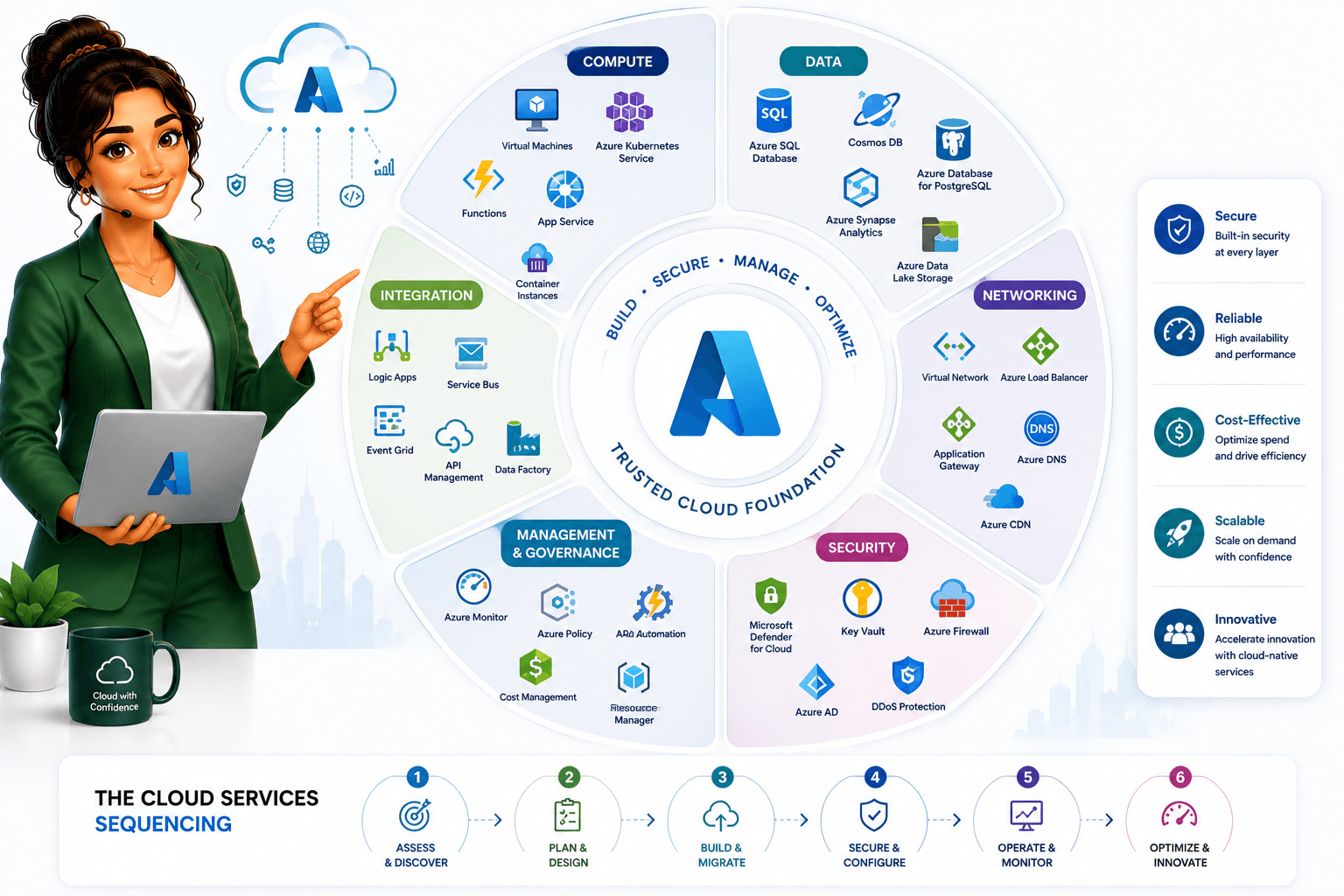
An Azure Well-Architected Review across your subscriptions. We read Advisor scores, Cost Management spend, Defender for Cloud alerts, Bicep or Terraform coverage, and how much compute sits idle. Free on every proposal call.
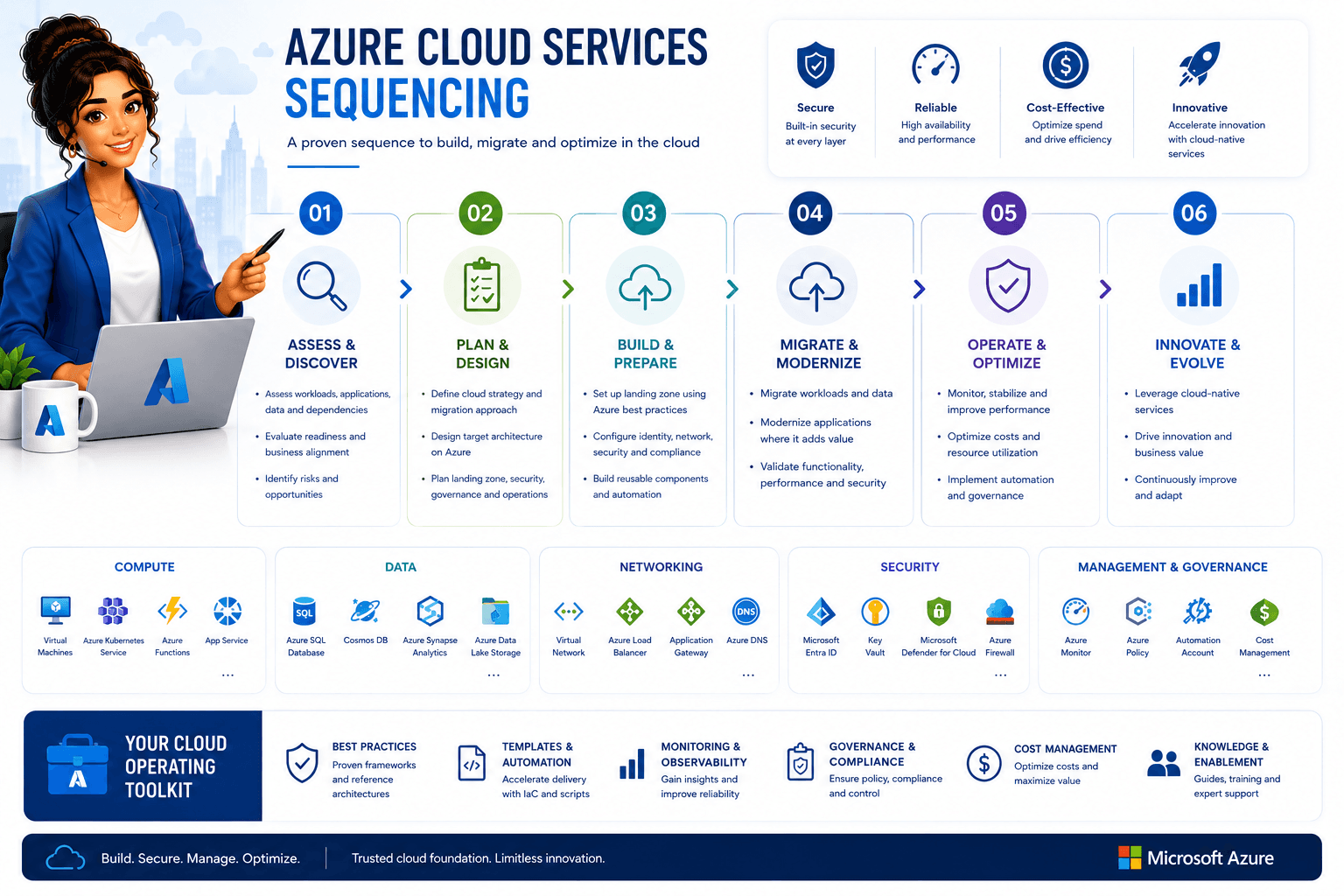
The written plan that orders your Azure work, migrate, then tune cost, then harden, back to one operational metric you pick. Built to show movement within a quarter.
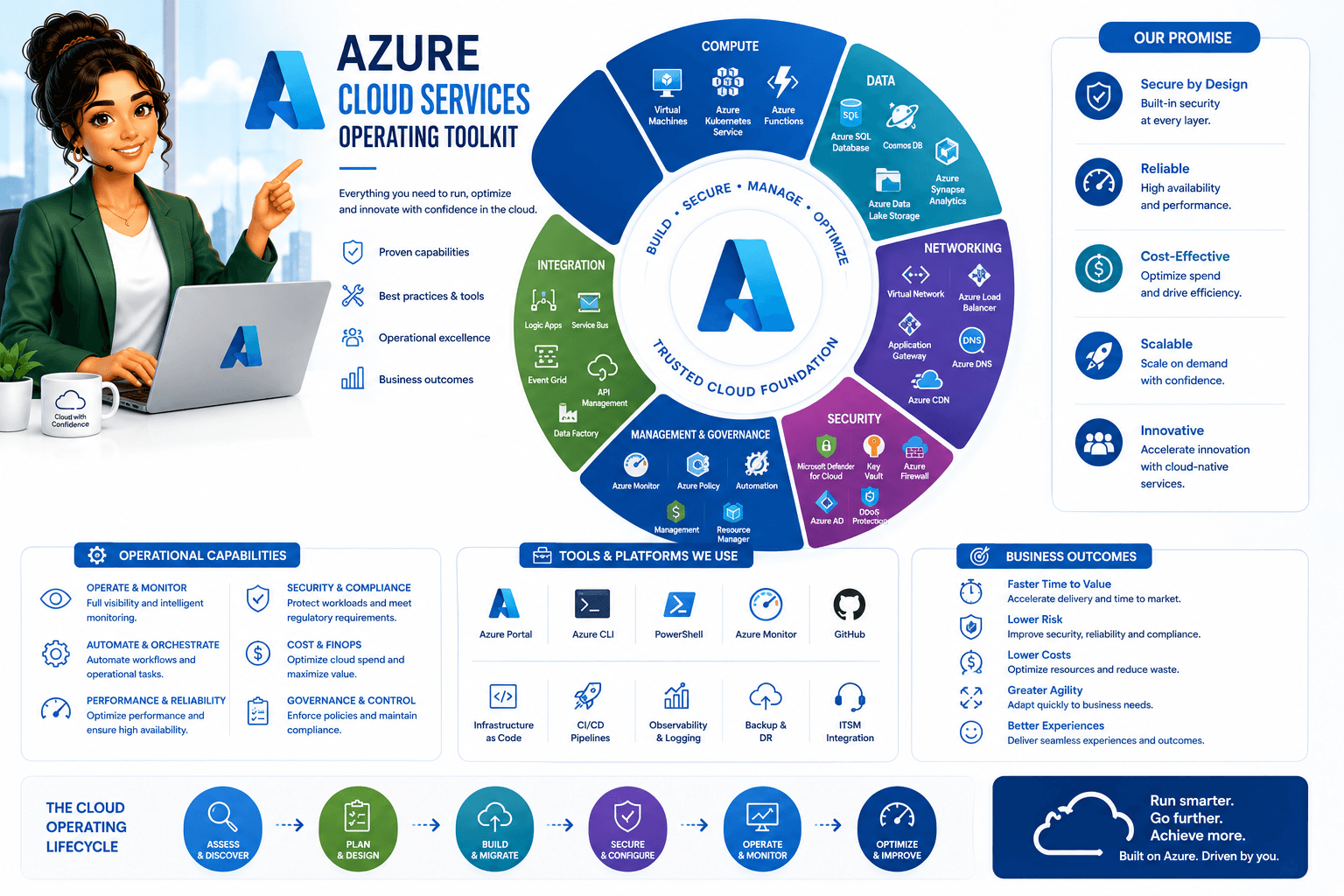
Internal toolkit that audits your Azure estate against the Well-Architected pillars and produces a prioritized remediation list your finance team can budget.
Three repeatable plays that make each Azure cycle steadier and cheaper than the last.
Free Dcrayon Score readout in one business day. We map your Azure estate against the five Well-Architected pillars and hand back one 0-100 number plus the gap list. No follow-on commitment.
A written 90-day plan tied to one operational metric you pick, like monthly Azure spend or recovery time. A senior architect writes the Bicep and Azure Policy; either side can close the SoW; no annual lock-in.
A weekly working session with your architect plus a monthly readout your finance team can follow. The work stacks: landing zone and Defender hardening first, then managed identities and RBAC, then autoscale rules and budget alerts.
Sibling Dcrayon services inside the Cloud and Data category. Programs clients often layer alongside Azure Cloud Services.

No junior engineers practicing on your subscription. The architect who scopes your Azure estate stays on it.

A written diagnostic and a fixed estimate in a single business day. No drawn-out discovery phase before you see real Azure findings.

Every Azure engagement ships automation as default: Bicep or Terraform, cost anomaly alerts, and Copilot-assisted runbooks.

A weekly working session and a monthly Score tied to one operational metric, with Azure spend and reservation coverage shown in plain figures.



Across our 60+ active solutions retainers, the median 12-month waste we measure on unmanaged Azure estates, idle VMs, oversized SKUs, and forgotten resources, lands in the Rs 6L to Rs 90L band. Book the scoping call to size yours.
Free five-axis Dcrayon Azure Score in one business day
Written Azure plan tied to one operational metric you pick

Standard Azure engagements begin within a couple of weeks of signing. Urgent post-incident support can begin sooner, once scope and access are confirmed.
Both. Some clients use us as their full Azure team; others use us as senior architect and escalation alongside an internal team. We scope per account.
Most Azure engagements start at Rs 4 to 8 lakhs per month in India, or USD 6 to 15 thousand per month for global clients. Audit-only work starts lower.
Yes. A free five-axis Score readout in one business day on every proposal call. No follow-on commitment required.