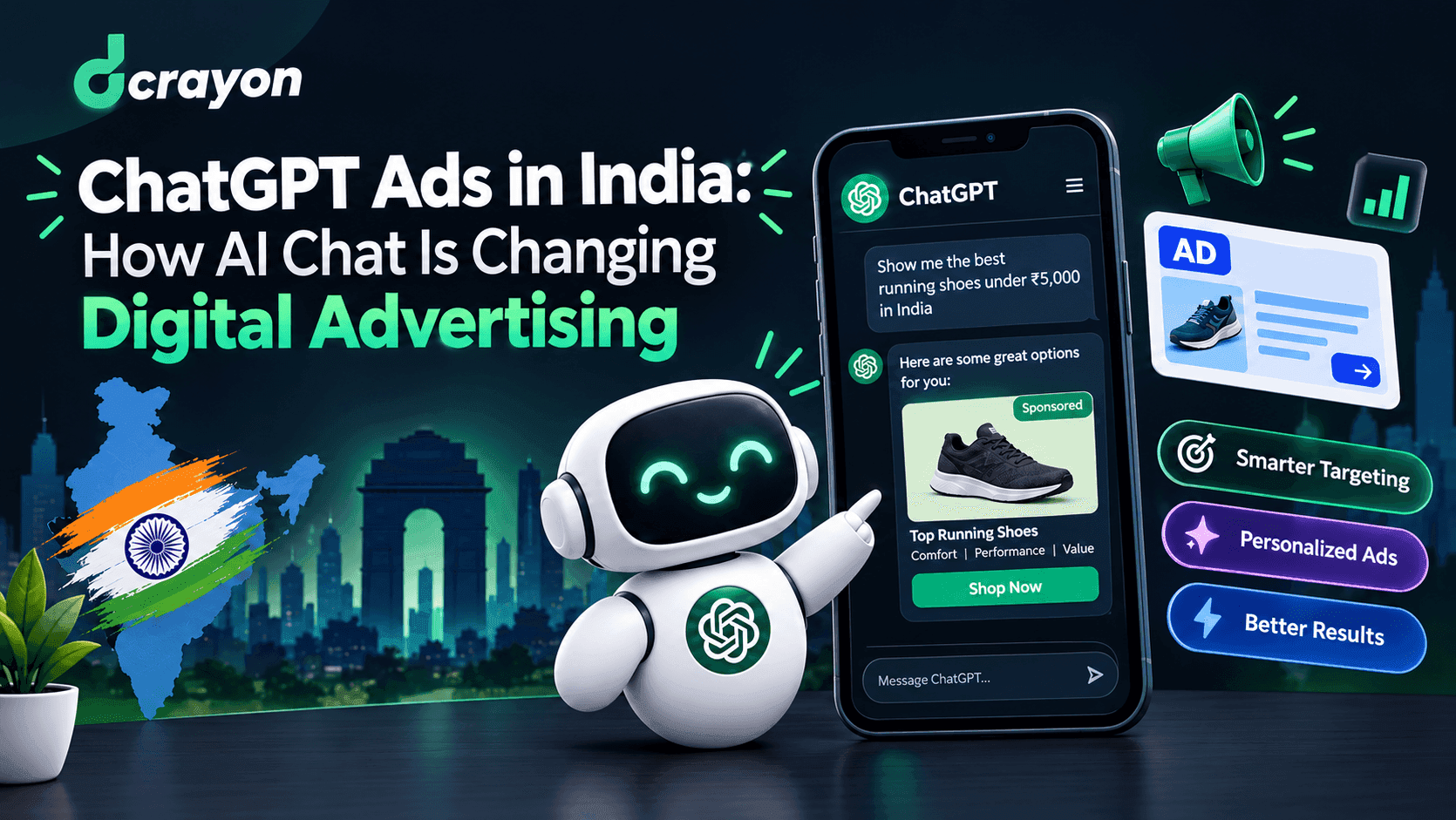
Digital advertising is entering a new phase as people increasingly use AI assistants not just to search for information, but to compare products, explore options, and make purchasing decisions. With chat gpt ads now expanding into India, advertisers have a new environment in which they can reach consumers during conversational decision-making moments.
OpenAI has expanded ChatGPT Ads globally, with self-service advertising through Ads Manager becoming available in India on August 31, 2026. OpenAI says advertisers can use ChatGPT to reach people as they explore options, compare choices, and make decisions.
But the bigger question is not simply whether ChatGPT can display advertisements. It is whether advertising inside an AI conversation can create a fundamentally different commercial opportunity from traditional search and social advertising.
What Makes ChatGPT Ads Different?
Traditional search advertising often depends heavily on keywords. Someone searches for "best laptop under ₹1 lakh," and advertisers can compete for that particular search intent.
A conversation with an AI assistant can reveal considerably more context.
For example, someone might begin by saying:
"I need a laptop."
During the conversation, they may explain that they travel frequently, prioritise battery life over raw performance, occasionally edit videos, want something lightweight, and have a budget of ₹1 lakh.
The important information isn't simply that the person wants a laptop. The conversation can reveal why they want one and what characteristics are important to them.
This is one of the potentially significant differences between traditional advertising and chat gpt ads.
OpenAI describes its advertising environment as being built around conversation, context, and real-time decisions, allowing advertisers to move beyond simple keyword signals.
From Keywords to Context
Search advertising has traditionally revolved around questions such as:
What keyword is the customer searching for?
How much commercial intent does that keyword have?
Which product or service should appear for that query?
How much should an advertiser pay for the click?
AI advertising introduces another layer of context.
Instead of simply understanding that someone searched for "running shoes," an AI system may have conversational context indicating that the person runs five kilometres several times a week, has experienced discomfort with previous shoes, prefers lightweight footwear, and has a specific budget.
That richer context could potentially help advertisers match products with consumers more effectively.
This doesn't automatically mean chat gpt ads will produce better results. The real test will be whether this additional context translates into higher-quality leads, better conversion rates, lower acquisition costs, or greater incremental sales.
Commerce Is Moving Into Conversations
The most interesting opportunity may not be simply placing advertisements beside shopping-related questions.
The larger opportunity is commerce within conversations.
Imagine someone asking an AI assistant:
"Which smartphone should I buy?"
Instead of immediately searching Google or visiting several ecommerce websites, they might have a conversation about camera quality, battery life, gaming performance, price, software, and brand preferences.
The AI can help them understand the differences between options and narrow down their choices.
This changes the role of the platform.
If a consumer already knows exactly what they want, advertising is primarily about capturing existing commercial intent.
But if an AI conversation helps a person discover a product category, understand alternatives, identify their priorities, and finally decide what to purchase, the platform may become a much more active part of the buying journey.
That distinction could become extremely important for the economics of chat gpt ads.
Will ChatGPT Ads Influence Recommendations?
This is one of the most important questions surrounding AI advertising.
People use ChatGPT because they expect useful and independent answers. If advertising directly influenced the answers, it could undermine user trust.
OpenAI says its ads are separate from ChatGPT's answers and that advertisers cannot influence, rank, or alter the responses generated by the chat model. Ads are also clearly labelled and displayed separately from responses.
This separation is important.
For chat gpt ads to become a sustainable advertising channel, users need to understand the difference between an AI-generated answer and a paid advertisement.
The long-term success of the model may depend on maintaining that distinction.
What Does This Mean for Brands?
The rise of AI advertising could change how brands think about digital discoverability.
For years, businesses have focused on questions such as:
- "What keywords should we rank for?"
- With AI search and conversational discovery, another question becomes increasingly important:
- "What problems is our product a good solution for?"
- A brand needs to make it easy for AI systems to understand:
- What the product does
- Who the product is designed for
- What problem it solves
- What makes it different
- What features it offers
- How it compares with alternatives
- Whether the information about the product is accurate and trustworthy
This means product descriptions, websites, reviews, FAQs, structured information, and other online content could become increasingly important for AI-driven discovery.
Paid Discovery vs Organic AI Discovery
Another major area to watch is the relationship between paid and organic visibility.
Advertising can help a brand appear in a commercial environment, but consumers may also ask AI assistants questions such as:
- "What are the best running shoes for beginners?"
- "Which laptop is best for video editing under ₹1 lakh?"
- "What are good sanitary pads for heavy flow?"
- "Which badminton racket should I buy under $100?"
If AI systems increasingly influence purchasing decisions, brands will want to understand why some products are mentioned organically while others are not.
This creates a new form of discoverability that goes beyond traditional SEO.
The question may gradually shift from:
- "How do I rank for this keyword?"
- to:
"How can AI understand that my brand is a relevant answer to this customer's problem?"
How Can Advertisers Approach ChatGPT Ads?
Businesses entering this new advertising environment should avoid treating AI advertising as simply another version of search advertising.
Instead, advertisers should focus on the context surrounding their products.
For example, a travel company might think beyond:
- "People searching for hotels."
- Its broader customer situations could include:
- Families planning holidays
- Couples looking for weekend trips
- Business travellers needing convenient accommodation
- Travellers searching for budget-friendly stays
- People planning last-minute trips
This context-driven approach could become increasingly important as AI advertising develops.
OpenAI's advertising platform highlights richer contextual signals and describes ChatGPT as an environment where people explore options, compare alternatives, and make decisions.
Privacy and User Trust Matter
The commercial opportunity of conversational AI also comes with an important responsibility: privacy.
Consumers may share considerably more information in a conversation with an AI assistant than they would through a short search query.
According to OpenAI, advertisers do not receive access to users' private conversations, chat history, memories, or personal details. Advertisers receive aggregated, non-identifying performance information instead.
OpenAI also says users can control aspects of their advertising experience, including ad personalization.
These protections will be particularly important as AI becomes more involved in commercial decision-making.
What Will Determine the Success of ChatGPT Ads?
The future of chat gpt ads will ultimately depend on performance rather than novelty.
There are three major areas worth watching.
1. Performance
Do conversational ads generate better clicks, leads, sales, or conversions than traditional advertising channels?
More context is valuable only if it produces better business outcomes.
2. Incrementality
Are AI platforms creating new commercial activity, or are they simply capturing purchases that would have happened through search, ecommerce platforms, or other channels anyway?
If AI helps consumers discover products they would otherwise never have considered, the value of the platform could be considerably greater.
3. Organic AI Discovery
As consumers increasingly ask AI systems what they should buy, which brands appear organically?
This could become one of the biggest questions for marketers over the coming years.
Brands may eventually need to optimise not only for search engines, but also for how their products are understood and represented by AI systems.
ChatGPT Ads and the Future of Digital Marketing
The arrival of chat gpt ads in India represents more than another advertising placement.
It points toward a broader change in how people discover information and make purchasing decisions.
Search engines primarily helped people find information.
Social platforms helped brands capture attention.
Conversational AI could increasingly help people make decisions.
That difference could reshape digital marketing.
Instead of competing only for keywords, brands may need to compete for relevance within specific customer situations and problems. Instead of asking only how many people searched for a product, marketers may increasingly ask how many people are having conversations about the problem that product solves.
Final Thoughts
ChatGPT Ads are still a developing advertising channel, and it is too early to know whether they will ultimately outperform established platforms such as Google, Meta, or other digital advertising networks.
However, the underlying shift is significant.
AI conversations can contain richer context about what people want, why they want it, what constraints they have, and how they are evaluating different options.
If that context can be used responsibly to connect consumers with relevant products while keeping AI answers independent and protecting user privacy, chat gpt ads could become an important part of the next generation of digital advertising.